The Trump administration is preparing to retire one of the long-serving Boeing 747s that has carried American presidents around the world for more than three decades, marking the end of an era for one of the most recognizable symbols of U.S. power as a newly refurbished aircraft donated by Qatar moves closer to presidential service.
The transition was marked Thursday morning after President Donald Trump and White House staff returned from France. White House communications director Steven Cheung and Deputy Chief of Staff Dan Scavino posted photos of the outgoing aircraft on Twitter, commemorating what appeared to be one of its final presidential flights. Cheung captioned one image “The Last Ride” and wrote, “Well done, good and faithful servant.”
"Well done, good and faithful servant.”
The Last Ride. pic.twitter.com/YGNCDvjRSB
— Steven Cheung (@StevenCheung47) June 18, 2026
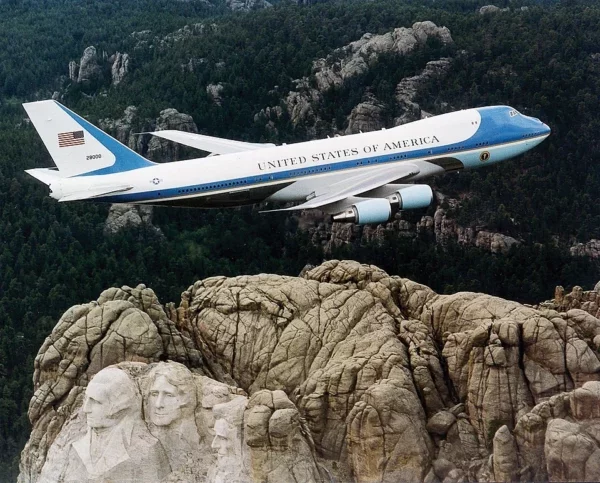
The aircraft being phased out is one of the two highly customized Boeing 747s that have flown under the Air Force One call sign when carrying the president since the early 1990s. For 35 years, the planes have served not merely as transportation, but as airborne command centers, diplomatic backdrops, and enduring images of American executive authority.
The replacement now being prepared is not one of the two next-generation 747s Boeing was contracted in 2017 to build as the permanent successors, explained The Washington Post. Those aircraft remain delayed and may not be ready before the end of Trump’s second term. Instead, the administration is moving forward with a temporary aircraft donated by Qatar and rapidly modified by the Pentagon and contractor L3Harris.
The Air Force announced last month that modifications and flight testing on the Qatari jet had been completed, though officials have stopped short of saying when it will carry the president. In a statement, the service said “the Presidential Airlift Group will select the appropriate aircraft for each mission based on operational requirements.” The Air Force added, “We coordinated closely with appropriate government entities to ensure all functional mission requirements were strictly met for transporting the President.”
The aircraft has already received a new exterior design. A nighttime photograph taken in early June by aviation photographer Travis Ghormley showed the plane in Waco, Texas, after repainting, displaying a dark blue, red, gold, and white color scheme.
Inside, however, the aircraft reportedly remains closer to its original configuration as a Qatari royal aircraft than to the office-heavy arrangement of the current Air Force One. Officials said the plane’s luxury lounge areas were largely preserved rather than fully rebuilt into the working suites and communications spaces associated with the existing presidential aircraft. The Air Force said that “by making minimal changes to the previous head-of-state interior” it was able to move more quickly while retaining the security features required for presidential transport.
That decision reflects the central tradeoff behind the entire project: speed over permanence. Pentagon officials told lawmakers in May that the total cost of overhauling the donated aircraft had not exceeded $400 million. By comparison, the Government Accountability Office has estimated that the two primary replacement aircraft will now cost more than $5.6 billion to bring to operational status.
Several upgrades were skipped to save time and money. The Air Force said the omitted work included widening the lower front door and rear access door, “which will eventually be needed on the final aircraft to accommodate a presidential casket.” Floor-height adjustments and additional sets of air stairs were also left out.
For the outgoing aircraft, the moment closes a chapter in presidential history. Across 35 years, it carried presidents through wars, summits, crises, funerals, campaigns, and state visits, becoming less a machine than a moving emblem of the office itself. Its retirement marks the departure of a familiar image of American power—one built for continuity, command, and ceremony—and its final flights offer a reminder that even the most enduring symbols of the presidency eventually give way to the next era.