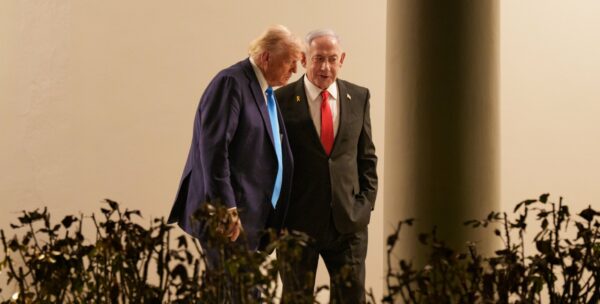
President Donald Trump has confirmed reports that he sharply confronted Israeli Prime Minister Benjamin Netanyahu during a phone call over Israel’s repeated military actions in Lebanon, acknowledging that he used strong language as frustration mounted over a conflict that risked complicating ongoing diplomatic efforts in the region.
The conversation, first reported by Axios journalist Barak Ravid, reportedly took place as Iran threatened to withdraw from peace negotiations with the United States in response to Israeli strikes in Lebanon. With the talks facing renewed uncertainty, Trump personally reached out to Netanyahu.
According to sources cited by Axios, the president expressed deep frustration during the call, allegedly referring to the Israeli leader as “crazy” and accusing him of being ungrateful. The report quickly drew attention amid heightened tensions across the Middle East and growing concerns about the effect continued military operations could have on diplomatic negotiations.
Senior officials close to Netanyahu disputed portions of the Axios report, however. Members of the prime minister’s team described the account as inaccurate and specifically challenged claims regarding some of the personal remarks allegedly made by Trump during the exchange.
Despite the pushback, Trump later confirmed the central premise of the report during an interview with New York Post columnist Miranda Devine on her podcast, Pod Force One.
Devine directly asked the president whether reports were true that he had spoken to Netanyahu in unusually blunt and profane terms.
“Now Axios reported that you had a phone call with Bibi Netanyahu, the prime minister of Israel, in which you were angry with him,” Devine said. “You said, ‘Are you effing crazy? What are you effing doing? I helped you stay out of jail.’ Is that true? Did you speak to him in those terms?”
“I did,” Trump replied.
While confirming the report, the president sought to characterize his feelings as frustration rather than outright anger.
“I wouldn’t say angry,” Trump said. “I was a little bit perturbed at his constantly fighting with Lebanon.”
Trump suggested that his concerns centered on the continuing conflict and his desire to see the fighting brought under control.
“You know, at some point I said, ‘Bibi we gotta stop this, we gotta stop it,’” Trump explained.
Even as he acknowledged the tense exchange, the president emphasized that his relationship with Netanyahu remains strong and that the two leaders have worked closely together.
“But I have a very good relationship,” Trump said. “We’ve done well together.”
The president also noted Netanyahu’s frequent acknowledgment of American support, arguing that the partnership between the two countries has been critical.
“He always says we could never have done it, but everybody knows that we could have never done it without the United States,” Trump said. “But we’ve worked very well together.”
Trump continued to praise Netanyahu personally despite the disagreement, making clear that the phone call reflected a dispute over current events rather than a breakdown in relations.
“I like Bibi a lot and I’ve worked very well with him,” he said.
The president framed both leaders as operating under extraordinary circumstances, noting the pressures that accompany leadership during periods of conflict.
“We had where, you know, where I’m a wartime president, he’s a wartime prime minister,” Trump said.
Calling the Middle East a “very important part of the world,” Trump concluded that the two leaders have accomplished a great deal together, even as ongoing fighting and fragile negotiations continue to test diplomatic efforts in the region.
At a moment when military actions risk influencing broader peace talks, the exchange underscored the difficult balance between maintaining alliances and preventing conflicts from escalating further.
[READ MORE: Iowa Republicans Reject Trump-Endorsed Candidate in Surprise Governor Primary Upset]