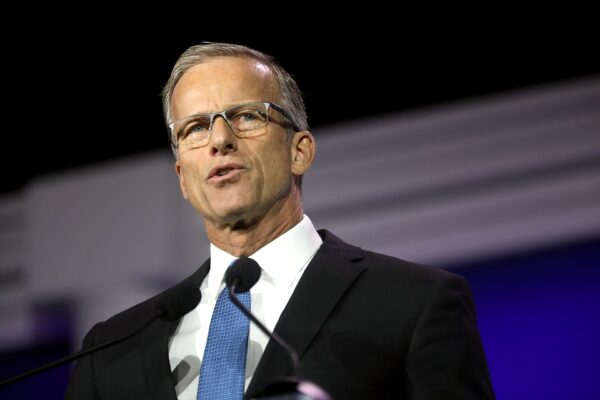
Senate Majority Leader John Thune is urging the White House to take the lead in resolving one of the most contentious issues holding up a major Republican budget package, signaling that the administration should shut down its proposed $1.8 billion anti-weaponization fund if lawmakers hope to move forward with reconciliation legislation in the near future.
Speaking with reporters at the Capitol on Monday, the South Dakota Republican made it clear that he believes the administration itself should bring the debate to a close rather than forcing Congress to continue grappling with the issue.
“I made my views very clear on the issue,” Thune said.
When asked directly whether he would prefer the administration abandon the proposed fund, Thune responded affirmatively, nodding yes before elaborating on his position.
“I do think the best way to handle it is if the administration decides to shut it down themselves,” he added.
The comments underscore growing concerns among Senate Republicans about the political and legislative complications surrounding the fund, which has become a major sticking point as lawmakers attempt to advance a broader spending package.
The proposed anti-weaponization fund was designed to compensate individuals who were prosecuted by the Justice Department during the Biden administration. However, the initiative has generated enough controversy within Republican ranks that it is now threatening progress on a much larger legislative effort.
At the center of the dispute is a $72 billion budget reconciliation package intended to provide funding for Immigration and Customs Enforcement and the Border Patrol through 2029. Republican leaders had hoped to move the measure through the Senate, but momentum stalled before lawmakers departed Washington for the Memorial Day recess.
Several GOP senators expressed reluctance to vote on the package without first receiving a clear explanation of how the administration planned to address the anti-weaponization fund. Their concerns effectively halted movement on the legislation, leaving the future of the package uncertain.
The standoff highlights the challenges facing Senate Republicans as they attempt to maintain unity behind a sweeping funding proposal while also navigating disagreements over separate administration initiatives. While support for funding border security operations remains a key priority within the conference, questions surrounding the anti-weaponization fund have complicated efforts to advance the broader legislation.
Thune’s remarks suggest he sees a straightforward solution: remove the issue entirely by having the administration voluntarily discontinue the fund. Such a move, in his view, could eliminate a major obstacle standing in the way of Senate action.
The debate arrives as lawmakers continue wrestling with major spending priorities and the role of government programs that have become flashpoints in Washington. While the reconciliation package focuses on immigration enforcement and border operations through the end of the decade, attention has increasingly shifted toward the controversy surrounding the compensation fund and its impact on the legislative process.
For now, the fate of both the anti-weaponization fund and the larger reconciliation package remains unresolved. What is clear is that Senate Republicans are seeking clarity before moving forward, and Thune has publicly indicated that he believes the administration itself is best positioned to provide it.
Until that question is settled, one of the GOP’s most significant spending measures remains stalled, leaving lawmakers searching for a path forward after the holiday recess
[READ MORE: Schumer Moves To Make Sure Anti-Weaponization Fund Never Gets Off The Ground]