Sen. Rand Paul sharply criticized Senate Democrats on Tuesday during a contentious committee markup over a $72 billion Department of Homeland Security funding package, accusing the minority party of forcing Republicans into a reconciliation process that limits broader immigration reforms while deepening partisan divisions over border enforcement.
Paul, who chairs the Senate Committee on Homeland Security and Governmental Affairs, opened the hearing by arguing Democrats left Republicans with little choice after months of battles over funding for immigration enforcement agencies.
“The process Democrats have forced us into is an imperfect one,” Paul said during his opening remarks.
The reconciliation process allows Senate Republicans to fund agencies such as Immigration and Customs Enforcement and Border Patrol through 2029 with a simple majority vote, bypassing the Senate’s traditional 60-vote threshold needed to overcome a filibuster. Republicans turned to the process after Democrats repeatedly blocked DHS funding legislation amid disputes over President Donald Trump’s nationwide immigration crackdown.
The standoff ultimately contributed to a record-long government shutdown that lasted until May 1, underscoring how deeply divided Washington remains over border security and federal immigration enforcement.
Paul argued that reconciliation rules prevented lawmakers from including policy reforms, even ones that had previously received bipartisan interest.
“One consequence of using this process is we cannot include policy changes, even the widely supported reforms agreed to by the President to address real problems exposed earlier this year,” he said, adding that Democrats “have no one to blame but themselves.”
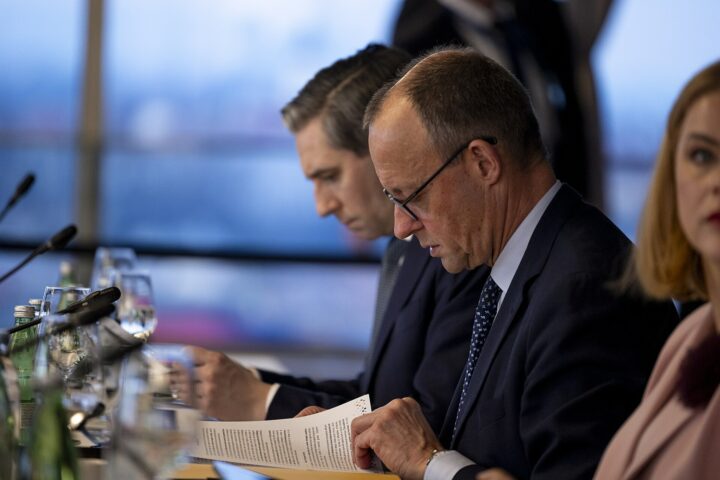
During the two-and-a-half-hour markup session, Democrats introduced dozens of amendments seeking new restrictions and oversight measures for DHS agencies. Proposed reforms included requiring ICE agents to clearly identify themselves during operations, expanding judicial warrant requirements, and banning DHS officers from entering houses of worship during enforcement actions.
Sen. Gary Peters, the committee’s ranking Democrat, accused Republicans of refusing to pursue what he called “common sense reforms” aimed at increasing accountability for immigration agencies.
“In fact, we are doing this whole irresponsible and hyper-partisan spending exercise because the Republican majority does not want to pass common sense reforms that would rein in ICE and hold agencies accountable,” Peters said.
Every Democratic amendment was ultimately tabled along party-line votes of 8-7. Democratic Sens. John Fetterman and Ruben Gallego voted by proxy.
Paul urged fellow Republicans to reject the amendments, explaining that Senate budget rules prohibit “extraneous” policy provisions in reconciliation legislation.
“I, for one, support a lot of reforms and wish we had gone down the bipartisan road to reforms, but the rules are the rules,” Paul said. “You can’t put policy on appropriation bills; you can’t put policy on a reconciliation bill.”
He further blamed Democrats for ending negotiations by refusing to support additional ICE funding.
“When y’all made that decision, the negotiations ended, and all hope for reform ended,” Paul added.
Several Democrats disputed Paul’s interpretation of Senate procedure. Sen. Maggie Hassan argued the Byrd Rule did not apply in this situation, while Peters accused Republicans of “hiding behind procedural excuses” in order to move the bill quickly ahead of what he called Trump’s “arbitrary June 1 deadline.”
Republicans are still revising portions of the legislation after Senate Parliamentarian Elizabeth MacDonough ruled last week that several provisions violated the Byrd Rule and could not remain in the package as originally written.
The heated hearing also became a broader forum for criticism of the Trump administration’s proposed $1.176 billion taxpayer-funded compensation fund for individuals claiming mistreatment by the federal government.
Sen. Richard Blumenthal introduced an amendment proposing a similar fund for victims allegedly harmed by DHS personnel, including U.S. citizens injured or killed during immigration enforcement actions.
“The injuries and death cry out for justice,” Blumenthal said, arguing Congress should focus on compensating Americans harmed by government actions rather than fueling more political and legal conflict surrounding immigration enforcement.
[READ MORE: Maine Democrat Faces Renewed Scrutiny Over Graphic Reddit Posts and Past Online Controversies]