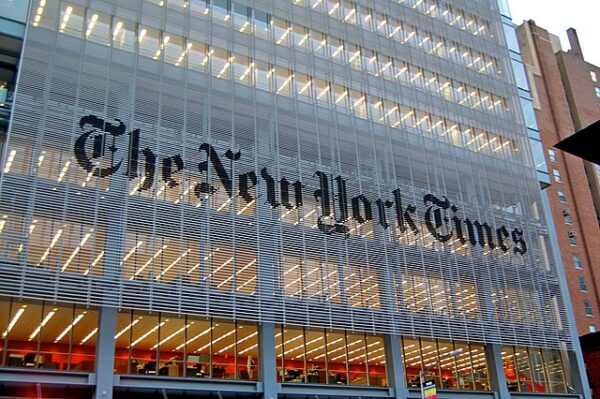
Israel’s Foreign Ministry sharply rebuked The New York Times on Monday following the publication of a column by Nicholas Kristof that detailed allegations of sexual abuse against Palestinians by Israelis, setting off a heated exchange that underscores the deep tensions surrounding the ongoing conflict.
Kristof’s article, titled “The Silence That Meets the Rape of Palestinians,” described what he characterized as “brutal sexual abuse” suffered by Palestinians, alleging mistreatment by prison guards, soldiers, settlers, and interrogators. The piece quickly drew condemnation from Israeli officials, who accused the newspaper of spreading falsehoods and distorting the reality of the conflict.
In a strongly worded statement, Israel’s Foreign Ministry denounced the column as one of the most egregious examples of misinformation in modern media. Officials argued that the article unfairly portrayed Israel as the aggressor while ignoring the suffering of its own citizens, particularly in light of the violence carried out by Hamas during the October 7 attacks and against hostages held afterward.
Calling the piece a “blood libel,” the ministry said the column represented a reversal of victim and perpetrator, framing Israel as guilty while downplaying the crimes committed against its people. The statement further suggested that the publication was part of a broader effort to damage Israel’s standing on the international stage, including attempts to place the country on a United Nations blacklist.
“Israel will fight these lies with the truth,” the ministry said, adding that it remains confident its position will ultimately prevail.
Kristof responded to the criticism on social media, acknowledging the Foreign Ministry’s reaction while directing readers back to his original column. His report, however, did not emerge in isolation. Allegations of abuse by members of Israel’s security forces have surfaced repeatedly since the war in Gaza intensified, contributing to an increasingly polarized narrative on both sides.
Last year, the United Nations released findings from an independent investigation examining claims of sexual and gender-based violence. The report alleged that actions such as forced public stripping, threats of rape, and other forms of abuse had become routine in certain interactions involving Palestinians and Israeli forces. It further suggested that some of these acts may have occurred with either explicit authorization or implicit acceptance from higher levels of leadership.
Israel has consistently pushed back against such claims, emphasizing the context of a brutal conflict in which its own citizens have faced horrific attacks. The Foreign Ministry’s latest response reflects that broader stance, rejecting the accusations as part of a coordinated campaign rather than an impartial assessment of facts.
The clash highlights the broader challenge of reporting on modern warfare, where competing narratives and deeply entrenched grievances often collide. As both sides point to atrocities committed by the other, the search for clarity becomes increasingly difficult, and the human cost—frequently invoked by all parties—remains at the center of the debate.
While the political and media battles continue, the situation serves as a reminder that in conflicts defined by both conventional and unconventional tactics, the lines between truth, perception, and propaganda can become blurred. And as accusations and counter-accusations mount, the broader question of accountability—on all sides—remains unresolved, even as the consequences of war continue to unfold.
[READ MORE: Trump Launches Moms.gov, Touts Drug Price Push While Taking Aim at Media Critics]