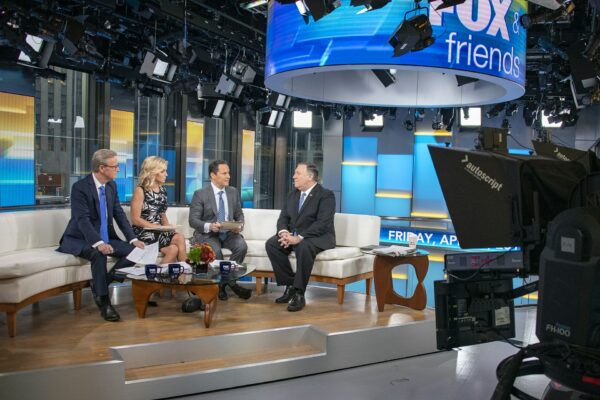
Fox News host Brian Kilmeade raised pointed questions Monday about the Trump administration’s approach to Iran, asking whether President Donald Trump is fully accounting for the power dynamics behind the scenes in Tehran following the rejection of a proposed deal to end the war.
The exchange unfolded on Fox & Friends after chief foreign correspondent Trey Yingst delivered an update on the ongoing conflict and the latest developments surrounding negotiations between the United States and Iran. Central to the discussion were reports about a potential peace framework and concerns over Iran’s stockpile of enriched uranium.
As the segment shifted back to the hosts, Kilmeade pressed Yingst on a key issue that has long complicated diplomacy with Iran: who is actually in charge. He questioned whether the president is dealing with Iran’s official political figures—such as the foreign minister or parliament leadership—or with the more hardline elements operating behind the scenes.
“Does he know who he’s dealing with?” Kilmeade asked, suggesting that the latest proposal from Iran represented a significant step backward. He pointed to the issue of enriched uranium, questioning whether Iran would be willing to give up what he described as a substantial stockpile or halt its enrichment efforts altogether. For Kilmeade, the proposal appeared to fall far short of expectations, leading him to speculate that the Islamic Revolutionary Guard Corps may be exerting dominant influence over the process.
Yingst responded by indicating that the president is well aware of the internal dynamics at play. While Iranian officials may present a diplomatic front through figures such as the foreign minister, parliament speaker, or President Masoud Pezeshkian, Yingst noted that the Islamic Revolutionary Guard Corps—the IRGC—remains a powerful force shaping outcomes behind closed doors.
According to Yingst, these hardline elements are steering negotiations in a way that aligns with their own priorities, even as public-facing representatives engage in talks. He emphasized that this dual structure is not lost on the administration, which understands that real authority may not rest with those formally leading discussions.
The conversation came just one day after Trump publicly dismissed Iran’s response to a U.S. proposal aimed at ending the conflict. In a brief but emphatic post on Truth Social, the president made clear that the terms presented by Iran were unacceptable.
“I have just read the response from Iran’s so-called ‘Representatives,’” Trump wrote. “I don’t like it — TOTALLY UNACCEPTABLE!”
The sharp rejection underscores the challenges facing any attempt to de-escalate the situation. While negotiations continue to surface in various forms, the gap between what each side is willing to accept remains wide. Questions about trust, authority, and long-term intentions continue to loom large, complicating efforts to bring the conflict to a close.
At the same time, the discussion highlights a broader concern that extends beyond the negotiating table. The stakes of prolonged conflict—both in terms of strategic consequences and the toll of continued hostilities—serve as a reminder that even as leaders weigh proposals and counterproposals, the costs of war remain an ever-present backdrop to every decision.