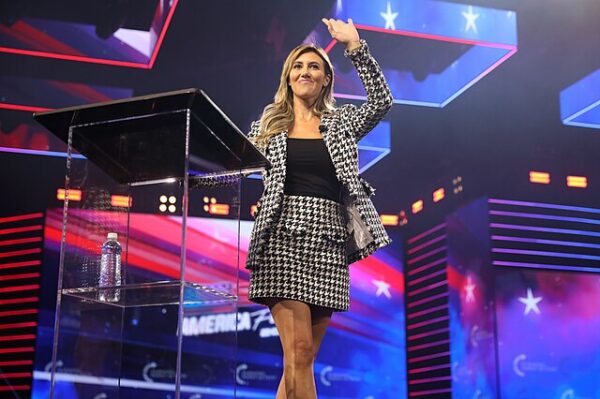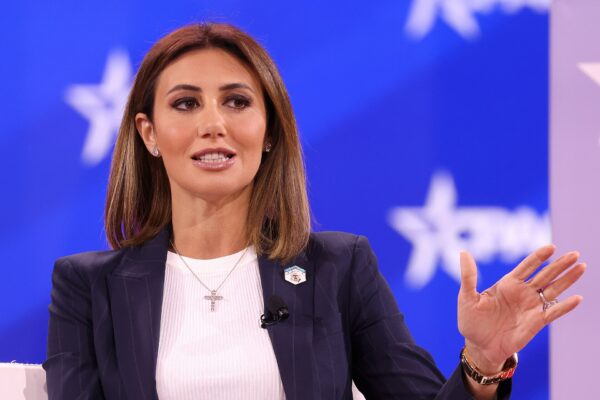
Longtime Trump advisor Alina Habba found herself in a tense on-air confrontation Wednesday with the hosts of the daytime talk show The View, as the panel sparred over the Justice Department’s indictment of former FBI Director James Comey.
The dispute stems from an announcement made a day earlier by President Donald Trump’s Justice Department, which charged Comey in connection with a 2025 social media post. The post featured a photograph of seashells arranged to display the numbers “86 47.” Critics of Comey interpreted the message as a call to remove Trump from office, noting that “86” is commonly used in restaurant slang to mean removing an item, while “47” references Trump’s status as the 47th president.
However, many Trump supporters went further, arguing the message carried a more sinister implication. Some claimed it amounted to a call for violence, accusing Comey of effectively threatening the president’s life — a charge that has fueled sharp political and media debate.
During Wednesday’s broadcast, co-host Sunny Hostin pressed Habba directly, asking whether she truly believed Comey’s post rose to the level of a criminal threat. What followed was a contentious exchange that underscored the deep divide over political rhetoric and accountability.
Habba defended the Justice Department’s actions, arguing that public figures — particularly someone with Comey’s background — carry a heightened responsibility for how their words and actions are interpreted. She insisted that the phrase “86 47” was not ambiguous in this context and claimed Comey understood its meaning.
Hostin pushed back, questioning Habba’s interpretation and suggesting that standard definitions of “86” do not support the claim that it implies violence. The disagreement quickly drew in other panelists, including Joy Behar, who noted the term’s common use in restaurant settings, challenging the idea that it carries a violent connotation.
Habba, however, stood firm. She argued that context matters and pointed to what she described as a real-world example to support her position. According to Habba, an individual who posted a similar phrase directed at her — “86 Habba” — was charged in Florida, reinforcing her view that such language can cross a legal line depending on how it is used.
Throughout the exchange, Habba emphasized what she described as a broader issue: the responsibility of influential voices in a highly charged political climate. She suggested that rhetoric, even when indirect, can have serious consequences and should be treated with caution.
Her remarks also referenced recent events, which she said had shifted her perspective on how public statements can be perceived and potentially acted upon. While the discussion remained focused on Comey’s post and the indictment, it also highlighted a larger concern shared across the political spectrum — that escalating language can contribute to an already volatile environment.
The clash on The View ultimately reflected a familiar divide in today’s political discourse. On one side are those who argue for strict accountability in how language is used by powerful figures; on the other, those who warn against stretching interpretations in ways that could chill speech.
As the legal case moves forward, the debate surrounding Comey’s post serves as a reminder of how quickly rhetoric can become a flashpoint — and how difficult it can be to strike a balance between vigilance and restraint in an era of heightened tensions.