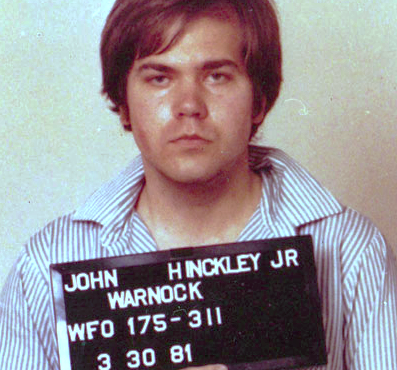
John Hinckley Jr., the man who shot President Ronald Reagan in 1981, is weighing in on the latest security scare at the Washington Hilton, saying the venue remains ill-suited for high-profile gatherings.
Hinckley’s comments come after a gunman was arrested Saturday near the hotel’s main security screening area, where Donald Trump, senior U.S. officials, and members of the press had gathered for the annual White House Correspondents’ Dinner. Shots rang out during the incident, prompting Secret Service agents to quickly remove Trump from the scene. A law enforcement officer was struck in a bulletproof vest, but no fatalities were reported.
The suspect, identified as Cole Tomas Allen, made his first court appearance Monday and did not enter a plea.
The Washington Hilton—already known in some circles as the “Hinckley Hilton” due to the 1981 attack—has since come under renewed scrutiny over its security protocols. Critics have pointed to what they describe as insufficient screening measures, especially for events that bring together the nation’s top leadership in one place.
In an interview with TMZ, Hinckley described it as “spooky” that the latest incident unfolded at the same location where he carried out his own attack decades earlier. He argued that the hotel should no longer host such high-profile events, saying “bad things keep happening” there and calling it “just not a secure place to hold big events.”
Hinckley’s perspective is rooted in his own experience. On March 30, 1981, he managed to position himself among reporters gathered outside the hotel as Reagan exited after delivering a speech. Armed with a revolver, he fired multiple shots, wounding Reagan, a police officer, a Secret Service agent, and then-White House Press Secretary James Brady. Brady was left permanently disabled and later died in 2014, with his death ruled a homicide stemming from those injuries.
Hinckley was ultimately found not guilty by reason of insanity and spent more than three decades in psychiatric care before being released in 2016. He received unconditional release in 2022.
In reflecting on both past and present incidents, Hinckley’s remarks add an unusual voice to an already intense debate about security and public safety at major political events. The idea that the same venue has now been linked to multiple high-profile threats is fueling broader concerns about whether long-standing traditions should be reconsidered.
At the same time, the response to such threats often leads to calls for tighter security and more controlled environments—steps that, while aimed at protection, can also reshape how public life unfolds. The balance between accessibility and safety remains difficult, particularly as events involving national leaders draw increasing attention and risk.
Hinckley himself has, in recent years, publicly spoken against violence. After a separate assassination attempt against Trump at a campaign rally in Pennsylvania in 2024, he posted a message urging restraint, writing that “violence is not the way to go” and calling for peace.
Now, with another incident tied to the same historic venue, questions are once again being raised—not just about security procedures, but about whether the risks surrounding such gatherings are evolving faster than the measures designed to contain them.
[READ MORE: Speaker Johnson Blames Heated Rhetoric After WHCA Shooting, Praises Calls for Cooler Tone]