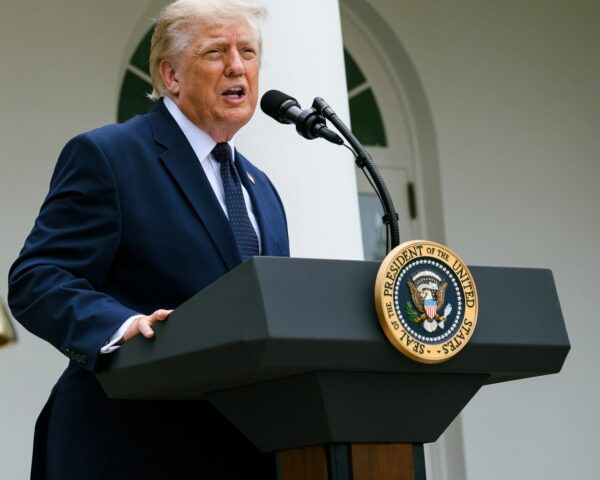
President Donald Trump on Sunday made clear he is keeping all options on the table in dealing with Iran, including the possibility of deploying U.S. ground forces if Tehran refuses to come to terms. In a brief phone interview, the president declined to rule out such a move, underscoring the high stakes as tensions continue to escalate.
“No,” Trump said when asked directly whether he would take sending ground troops off the table. He added that a resolution remains within reach if Iran chooses to act rationally. “Normal people would make a deal. Smart people would make a deal,” the president said, emphasizing his belief that diplomacy is still possible—if Tehran is willing.
At the same time, Trump paired that message with a stark warning. Earlier Sunday, he announced that the United States would target Iranian infrastructure, including power plants and bridges, if a deal is not reached and the Strait of Hormuz is not reopened. In a fiery social media post, the president declared that “Tuesday will be Power Plant Day, and Bridge Day,” signaling a potentially dramatic escalation.
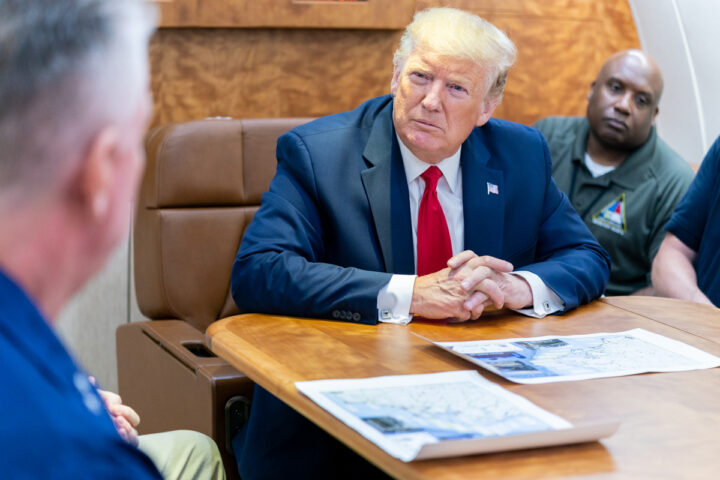
Trump later reinforced that nothing would be off-limits if negotiations fail, suggesting a sweeping approach to potential military action. He also posted a cryptic message referencing “Tuesday, 8:00 P.M. Eastern Time,” leaving observers speculating about what may come next. The White House has not yet clarified the meaning of that statement.
The president’s posture reflects a balancing act—projecting strength while still holding out hope for a negotiated solution. In separate interviews Sunday, Trump offered slightly differing timelines for a potential agreement, telling Fox News that a deal could come as soon as Monday, while suggesting to Axios that Tuesday remained a possibility. Even so, he coupled that optimism with a blunt warning, saying that failure to reach a deal would result in devastating consequences for Iran.
Despite the administration’s confidence, the prospect of deeper U.S. involvement carries significant risks. Sending American ground troops into Iran would mark a major escalation, one that could challenge the president’s repeated assurances that the conflict will not become a prolonged engagement. While many Republicans have backed the broader operation, some have voiced concern about the potential costs—both in terms of lives and long-term commitments.
At home, the situation is further complicated by rising oil prices, which the administration has characterized as a temporary issue. Still, economic pressure often tests public patience, and recent polling suggests Americans are increasingly wary of the conflict. A Reuters/Ipsos survey released last week found that 66 percent of respondents support ending the war, highlighting a significant gap between public sentiment and the administration’s current trajectory.
Trump has previously expressed confidence that the conflict could be resolved within weeks, stating last week that it might end in two to three weeks. Yet recent developments, including Iran’s most aggressive actions to date, suggest the path forward may not be so straightforward.
As Tuesday approaches, the president’s strategy appears to hinge on a mix of pressure and unpredictability—an approach that may bring Iran to the negotiating table, but also raises questions about how far the United States is willing to go if diplomacy falls short.
[READ MORE: Robinhood, BNY To Build Trump Account Apps]