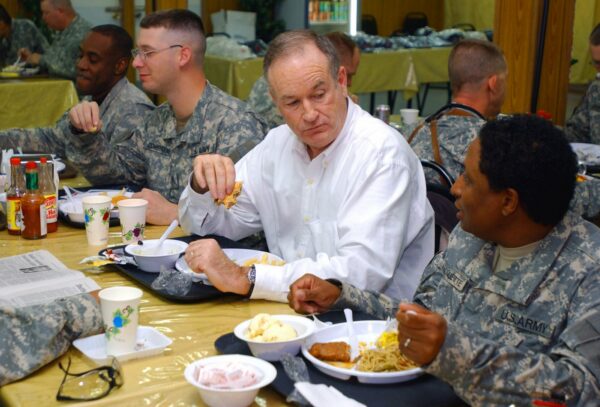
Conservative commentator Bill O’Reilly is now reportedly sounding an alarm over the political and economic stakes of the ongoing conflict with Iran, urging President Donald Trump to secure a deal within a narrow window—or risk consequences that could extend beyond the battlefield and into the ballot box.
Speaking on NewsNation’s “On Balance with Leland Vittert,” O’Reilly argued that the administration has roughly six weeks to reach an agreement with Iran that could stabilize oil markets and bring down rising prices. Without that progress, he warned, Republicans could face significant challenges in the upcoming midterm elections.
O’Reilly’s assessment reflects growing concern among conservatives that the economic fallout from the conflict—particularly higher energy costs—could erode public support at a critical moment. He suggested that if oil prices begin to fall soon, it could ease pressure on voters and improve the GOP’s prospects. But if the situation drags on, the political consequences could be substantial.
“I don’t want to use the word desperately,” O’Reilly said, “but [the president] needs a deal with Iran within, I’d say, six weeks.” He added that global oil supply remains strong, implying that a diplomatic breakthrough could quickly bring prices down.
At the same time, O’Reilly cautioned against rushing into an unfavorable agreement. While emphasizing the urgency of the moment, he noted that Trump understands the importance of negotiating from a position of strength, rather than appearing pressured by circumstances. The goal, he said, is a deal that works to the administration’s advantage “in every way.”
Still, he acknowledged that the outcome may depend not only on U.S. strategy but also on how much strain Iran can endure. He pointed out that Iran has already absorbed significant damage, while also raising the question of how the Iranian public may respond as the conflict continues.
O’Reilly drew a parallel to the prolonged stalemate in Ukraine, warning that a similar scenario with Iran—marked by ongoing conflict without resolution—could weigh heavily on voters. In that case, he suggested, the president could face political fallout if Republicans lose control of Congress.
That concern appears to be shared, at least in part, by some lawmakers. Senator Lindsey Graham, a longtime advocate of strong military action, has encouraged Trump to shift focus toward winding down the conflict and pursuing a peace agreement.
At the same time, Graham has faced criticism for remarks that seemed to support the possibility of deploying U.S. troops on the ground. Representative Nancy Mace pushed back forcefully, warning against what she described as “Washington’s war machine” and drawing a comparison to the Iraq War—an outcome many conservatives remain wary of repeating.
Meanwhile, the diplomatic picture remains uncertain. The Trump administration has indicated that it has engaged in talks with Iranian officials through Pakistani mediators and previously put forward a 15-point peace proposal. Iran rejected that offer and submitted its own plan, but officials in Tehran have denied that negotiations to end the conflict are currently underway.
Foreign Ministry spokesperson Esmaeil Baqaei stated that Iran’s position remains firm, emphasizing that as long as U.S. military operations continue at full intensity, the country will focus its efforts on defense. He added that Foreign Minister Abbas Araghchi has been clear on that stance.
As the situation unfolds, O’Reilly’s warning captures a growing tension: the need to project strength abroad while managing the economic and political realities at home. With time limited and stakes rising, the path forward may hinge as much on diplomacy as on military resolve.
[READ MORE: Eric Trump Announces The Trump Presidential Library]