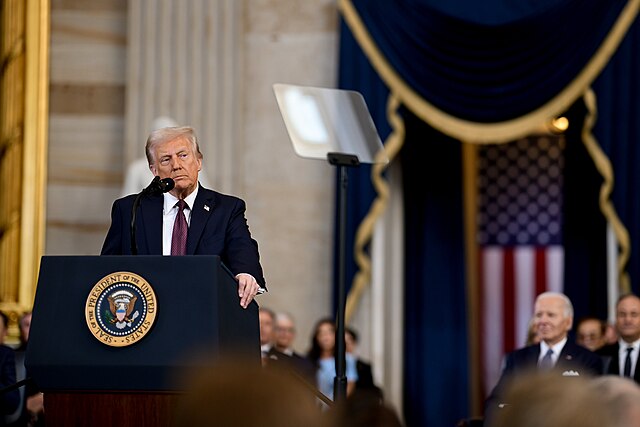
President Donald Trump said Monday that the United States and Iran have engaged in what he described as “very good and productive conversations” over the past two days, signaling a possible opening to ease tensions after days of escalating threats and military positioning in the Middle East.
In a post on Truth Social, Trump announced that he has ordered a temporary five-day halt on planned U.S. military strikes targeting Iranian power plants and energy infrastructure. The pause, he said, comes in response to the tone and progress of ongoing discussions between the two sides, which he indicated will continue throughout the week.
“I am pleased to report” that talks have been constructive and focused on a “complete and total resolution” of hostilities, Trump wrote, adding that the delay in military action is contingent on continued progress in negotiations.
The move marks a notable shift in posture from just days earlier, when the president issued a stark ultimatum to Tehran. Over the weekend, Trump warned that Iran had 48 hours to reopen the Strait of Hormuz — a critical global oil shipping route — or face sweeping U.S. strikes on its energy infrastructure.
At the time, Trump had threatened to “hit and obliterate” Iranian power plants if the waterway remained closed. The warning followed a sharp escalation in regional violence, including what officials described as Iran’s most destructive attack yet on Israel.
Iran, for its part, responded with its own dire warning, saying it would “irreversibly destroy” key infrastructure across the region, including water systems, if U.S. strikes were carried out. The exchange of threats underscored how quickly tensions had spiraled, raising fears of a broader and more damaging conflict.
Despite the latest diplomatic opening, the situation on the ground remains tense. The Strait of Hormuz is still effectively closed, fueling concerns about global economic fallout given its importance to international energy markets. Meanwhile, the U.S. has continued to reinforce its military presence in the region, including the deployment of additional Marines.
Trump’s decision to pause strikes, even temporarily, suggests a recognition that military escalation carries significant risks alongside any potential strategic gains. While the administration has emphasized strength and deterrence, the abrupt pivot to diplomacy highlights the delicate balance between projecting force and avoiding further conflict.
Supporters of the president’s approach may view the development as a sign that pressure has brought Iran to the negotiating table. At the same time, the rapid shift from ultimatums to talks reflects the unpredictable nature of high-stakes standoffs, where the consequences of miscalculation can be severe.
The next several days are likely to prove critical. Trump made clear that the suspension of strikes is conditional, leaving open the possibility that military action could resume if talks falter. For now, however, the pause offers at least a brief window for diplomacy to take hold.
As discussions continue, the broader question remains whether the two sides can translate what Trump described as “constructive” conversations into a lasting resolution — or whether the region will once again edge closer to confrontation, with all the costs that such a path entails.
[READ MORE: Trump To Deploy ICE To Airports To Help TSA]