President Donald Trump reportedly made clear late Sunday that he is not prepared to negotiate an end to the partial government shutdown unless Democrats agree to back a sweeping election reform package long championed by his administration, escalating tensions in an already gridlocked Washington.
In a post on Truth Social, Trump declared that no deal should move forward until Democrats join Republicans in passing the Safeguard American Voter Eligibility, or SAVE America, Act. The president framed the legislation as a top national priority, arguing it outweighs even ongoing negotiations over funding for key agencies.
“I don’t think we should make any deal” with Democrats, Trump wrote, unless they support the bill, which includes provisions such as requiring proof of citizenship to vote and sharply limiting mail-in ballots.
The president also took aim at a proposed agreement that would include a $5 billion reduction in Immigration and Customs Enforcement funding, dismissing it as unacceptable unless paired with broader election reforms. His demands go beyond voter identification, also referencing policies tied to election procedures and other cultural flashpoints.
Trump’s firm stance underscores how deeply intertwined policy disputes have become in Washington, where unrelated issues are often bundled together in high-stakes negotiations. While supporters argue the SAVE America Act would strengthen election integrity, critics — including members of Trump’s own party — have raised concerns about its viability in the Senate.
Senate Majority Leader John Thune, a Republican from South Dakota, has repeatedly acknowledged that the bill currently lacks the votes needed to pass. Despite that reality, Trump urged Thune to publicly identify Republicans who oppose the measure, accusing them of turning their backs on the country and warning of political consequences.
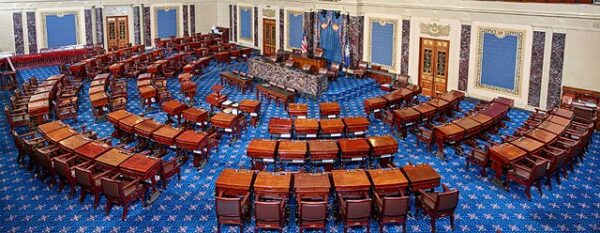
He also floated the idea of eliminating the filibuster — the Senate rule requiring 60 votes to advance most legislation — and suggested lawmakers remain in Washington through the Easter holiday if necessary to break the impasse. However, few senators in either party have expressed support for such a dramatic rules change, reflecting the institutional resistance that continues to shape the chamber.
Meanwhile, the shutdown itself shows little sign of resolution. Lawmakers on both sides have expressed frustration, with some acknowledging that the standoff could stretch on without a compromise that separates election policy from basic funding needs.
Sen. Lisa Murkowski, a Republican from Alaska, signaled skepticism toward the current approach, emphasizing the urgency of funding the Department of Homeland Security. She suggested that Congress should focus on practical solutions rather than tying the issue to broader legislative demands.
“This is not the answer,” Murkowski said, calling for lawmakers to find a path forward and warning that time is running short ahead of the next congressional recess.
Democrats, for their part, have held firm in opposition to fully funding DHS, citing concerns over the administration’s immigration policies. The party has voted down multiple funding proposals, maintaining pressure for changes within the department.
The result is a familiar Washington stalemate, where competing priorities and political brinkmanship leave essential government functions in limbo. As negotiations continue, the broader question remains whether either side is willing to step back from maximalist demands — or whether the shutdown will become yet another prolonged chapter in a cycle of partisan deadlock.
[READ MORE: Trump To Deploy ICE To Airports To Help TSA]