President Donald Trump is warning Australia against sending Iran’s women’s national soccer team back to Tehran, arguing that the players could face severe retaliation after recent geopolitical upheaval in Iran.
Trump delivered the warning Monday in a post on Truth Social, framing the issue as both a humanitarian concern and a test of Western resolve.
“Australia is making a terrible humanitarian mistake by allowing the Iran National Woman’s Soccer team to be forced back to Iran, where they will most likely be killed. Don’t do it, Mr. Prime Minister, give ASYLUM. The U.S. will take them if you won’t.”
The controversy comes as the Iranian squad wraps up its participation in the Women’s Asian Cup, hosted in Australia. The team arrived before tensions in the Middle East escalated dramatically. On February 28, U.S. and Israeli strikes targeted key Iranian sites during a rapid military campaign that ultimately resulted in the death of Supreme Leader Ali Khamenei, sending shockwaves through the country’s political system, according to Fox News.
Against that volatile backdrop, the conduct of Iran’s players during the tournament has drawn intense scrutiny from officials and media back home.
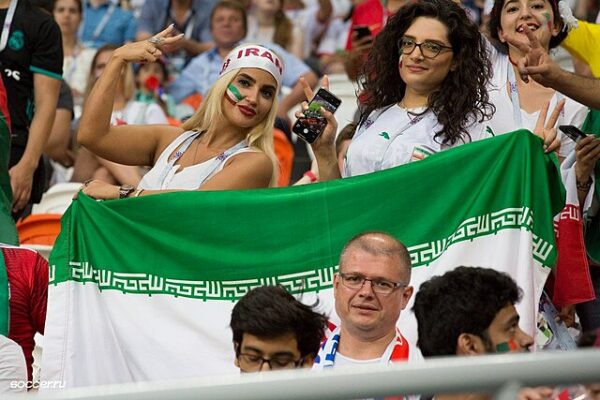
Before their opening match against South Korea, several members of the Iranian team reportedly remained silent during the national anthem. Observers interpreted the gesture as a quiet act of dissent against the regime. Reaction from Iran was swift and harsh. One commentator denounced the act as the “pinnacle of dishonor,” while state-aligned outlets reportedly branded the players “wartime traitors.”
Such labels carry serious consequences in Iran’s political culture, where accusations of disloyalty during wartime can trigger severe punishment.
The team’s posture appeared to change during later matches. Players sang the anthem and saluted the flag before subsequent games against Australia and the Philippines, a shift that some analysts interpreted as an attempt to reduce tensions with authorities back home.
Iran’s head coach, Marziyeh Jafari, sought to tamp down speculation about possible defections. Speaking to Australia’s national news agency, she said the team hoped to return home quickly once the tournament concluded.
Still, concerns for the players’ safety have continued to mount. The Australian Iranian Council recently sent a formal letter to Home Affairs Minister Tony Burke urging the government to consider protections for the athletes while they remain in the country.
An accompanying online petition warned that “where credible evidence exists that visiting athletes may face persecution, imprisonment, coercion, or worse upon return, silence is not a neutral position.”
Events on the ground have only intensified those fears. Reports indicate that five members of the Iranian team have already left the squad’s accommodations and are currently under police protection in Australia. Sources familiar with the situation say the players may be attempting to remain in the country due to fears of persecution if they return to Iran.
Australian officials have declined to discuss the situation publicly in detail. Assistant Minister for Foreign Affairs and Trade Matt Thistlethwaite, when asked whether asylum could be offered, said the government does not comment on individual immigration matters.
The episode has now drawn international attention, with human rights advocates, Iranian dissidents abroad, and political leaders weighing in on the players’ fate.
For the Iranian team—already eliminated after its final group-stage loss—the tournament may be over. But the question of what happens next could prove far more consequential than anything that occurred on the field.