Prediction betting company Kalshi is reportedly facing a class action lawsuit after refusing to pay out an estimated $54 million to users who bet that Iran’s supreme leader would be out of office by March 1, despite the leader being killed just days later.
The lawsuit, filed Thursday, accuses the company of acting in a “deceptive” and “predatory” manner by denying payouts to traders who believed their predictions had proven correct.
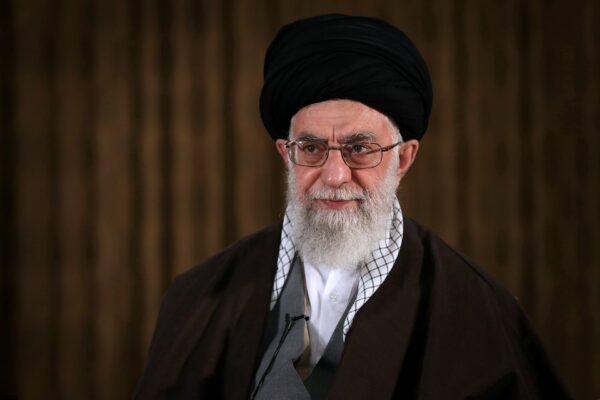
The controversy stems from a prediction market on Kalshi’s platform that allowed users to wager on whether Iran’s supreme leader, Ayatollah Ali Khamenei, would leave office by March 1.
Khamenei, the longtime leader of Iran, was killed earlier this week in strikes carried out jointly by the United States and Israel that targeted top figures within the Iranian regime.
Following his death, many users who had bet that Khamenei would be out of office by the March deadline expected their wagers to be resolved in their favor. However, Kalshi declined to pay out the winnings.
According to the lawsuit, participants in the betting market understood that the most likely scenario in which the elderly Iranian leader would leave power was through his death.
“With an American naval armada amassed on Iran’s doorstep and military conflict not merely foreseeable but widely anticipated, consumers understood that the most likely—and in many cases the only realistic—mechanism by which an 85-year-old autocratic leader would ‘leave office’ was through his death,” the complaint states.
The filing also argues that the company itself understood that possibility when offering the market.
Kalshi CEO Tarek Mansour has defended the company’s decision, saying the rules governing the market were clearly designed to prevent people from profiting directly from a person’s death.
“We don’t list markets directly tied to death,” Mansour wrote in a post on X.
“When there are markets where potential outcomes involve death, we design the rules to prevent people from profiting from death. That is what we did here,” he added.
After news of the lawsuit broke, Mansour reiterated his position and said the company had followed its policies exactly as written.
“We stand by principle and law,” Mansour wrote in another statement.
He outlined three key points in the company’s defense. First, he said Kalshi did not deviate from its established market rules and that those rules clearly stated that death would not automatically resolve the market outcome as “Yes.”
Second, he emphasized that the company’s guidelines were designed to prevent what he described as a “death market,” where users could profit directly from someone dying.
“This is a good thing,” Mansour wrote, noting that Kalshi operates as a U.S.-based company.
Third, Mansour said the company did not financially benefit from the situation and even took steps to ensure traders were not left with losses.
“Kalshi made no money here, and even reimbursed all losses out of pocket,” he said. “Not a single user walked away losing money from this market.”
According to Mansour, the platform has long included what he described as a “death carveout” rule that prevents death from being used as the mechanism for resolving certain prediction markets.
However, he acknowledged that some traders believed the rule was not clearly presented on the platform.
“While the rules were clear and we tried our best to highlight them, traders vocalized they were not prominent enough,” Mansour wrote.
He added that in response to those concerns, the company reimbursed users for fees and any net trading losses related to the market.
“We heard you, and we decided to reimburse out of pocket for all fees and all net losses from trading in the market,” Mansour said.
The lawsuit now seeks to compel Kalshi to pay out the winnings that users believe they earned after the Iranian leader’s death.
[READ MORE: Visitor Dies After Entering Restricted Area Near Kilauea Volcano at Hawaiʻi Volcanoes National Park]