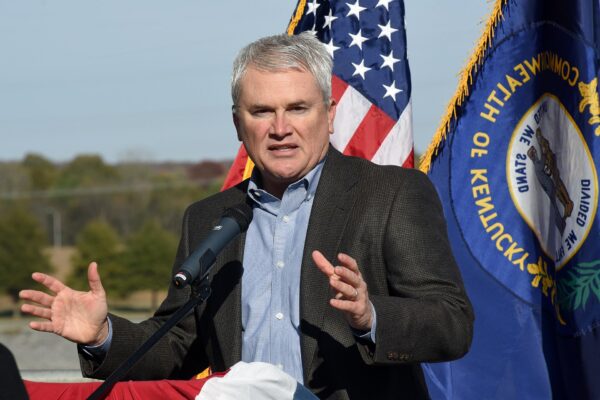
Rep. James Comer suggested Sunday that President Donald Trump may need to reconsider the deployment of Immigration and Customs Enforcement officers in Minneapolis if local leadership is creating conditions that put lives at risk, following the fatal shooting of 37-year-old Alex Pretti.
Appearing with Fox News anchor Maria Bartiromo, Comer responded to questions about the incident and the growing uncertainty surrounding what exactly occurred when Border Patrol agents shot Pretti during an enforcement operation in the city.
Bartiromo opened the exchange by underscoring the lack of clear evidence that Pretti posed an immediate threat to officers. She said there is no proof that he was waving a gun or threatening Border Patrol, noting that video from the scene shows Pretti holding his phone and recording the incident.
She then turned to Comer and asked what, if anything, elected officials can do in response.
Comer said that if he were in Trump’s position, he would seriously weigh whether keeping ICE officers in Minneapolis makes sense if city and state leaders are not cooperating and are instead placing federal agents in danger.
“If I were President Trump, I would almost think about, okay, if the mayor and the governor are going to put our ICE officials in harm’s way and there’s a chance of losing more innocent lives or whatever, then maybe go to another city,” Comer said. He suggested allowing the residents of Minneapolis to confront the consequences of local policies, asking whether they want to continue tolerating large numbers of undocumented migrants and leadership decisions that restrict cooperation with federal authorities.
Comer predicted that if undocumented migrants were allowed to blend into communities without enforcement, residents would eventually push back against their elected officials. He said Minnesotans would rebel against leadership they believe is failing to protect public safety.
Bartiromo pressed further, returning to a central unresolved question in the case: whether Border Patrol agents actually saw Pretti’s firearm before the shooting. Trump administration officials had claimed Pretti was “brandishing” a gun, but Bartiromo noted that no evidence has been presented to support that assertion.
“Do we know that ICE saw the gun?” she asked. “Do we know that it was visible? Or was this a guy with a camera recording the incident and knowing that he was armed, they learned that later? Do we know that?”
Comer acknowledged the uncertainty and said he does not have definitive answers.
“We don’t know,” Comer said. He added that he has watched the video repeatedly, like many Americans, trying to determine whether Pretti ever pulled out a gun. Comer said he has viewed the footage dozens of times, including in slow motion, and still cannot say for certain what happened in the moments before the shooting.
“I just know that the situation’s bad there,” Comer said, emphasizing the broader breakdown in trust and order surrounding the incident.
Pretti was an ICU nurse who legally carried a concealed handgun and had a valid permit to do so. In widely circulated video of the shooting, an officer can be seen removing a gun from Pretti before he was fatally shot.
The exchange highlighted growing frustration over conflicting accounts from federal officials, unanswered questions about the use of force, and the role local leadership plays in shaping the environment in which federal agents operate. Comer’s comments reflected a willingness among some Republicans to consider pulling back enforcement in cities where cooperation has broken down, leaving residents to decide whether current policies are working.