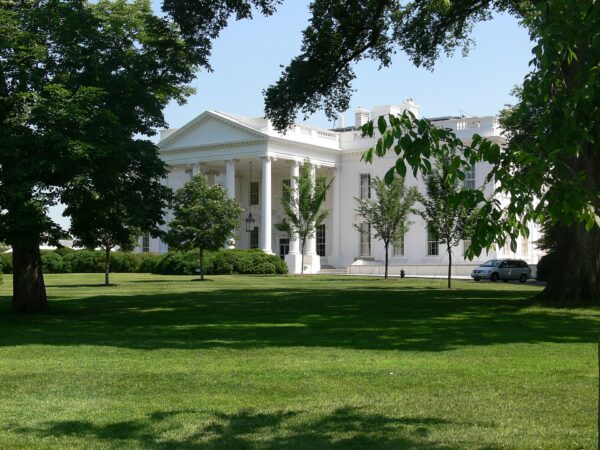
White House communications officials forcefully pushed back Tuesday against a report suggesting that President Donald Trump may have been granted access to a powerful experimental weight-loss drug through a special federal program.
The controversy stems from a report published by STAT News examining the use of an investigational obesity treatment known as retatrutide. The medication, developed by Eli Lilly, is currently in Phase 3 clinical trials and has not yet been approved for public use.
According to the report, Eli Lilly and federal regulators approved a request from a single patient to receive the drug through the Food and Drug Administration’s “compassionate use” program. That pathway is generally reserved for patients facing serious and immediately life-threatening medical conditions who are seeking access to treatments not yet available to the public.
Retatrutide has drawn attention because studies have reportedly shown it can produce body-weight reductions of roughly 30 percent, results comparable to those achieved through weight-loss surgery. The drug is described as an investigational triple hormone receptor agonist and remains under evaluation by regulators.
The STAT News article focused on the limited information available about the patient who received access to the treatment. According to the report, the individual was an overweight 79-year-old man who submitted a request for the medication in April. Because President Trump was 79 years old at the time, the article raised questions about whether he could have been the recipient.
The White House, however, responded with unusually sharp language.
While officials had not publicly confirmed or denied the identity of the patient before publication, senior communications staff quickly rejected the suggestion once the story gained attention.
White House official Kush Desai dismissed the claim in a post on social media, stating that the application was not for the president. Desai also criticized reporter Lizzy Lawrence, accusing her of pursuing an unfounded theory.
“Because this has to be spelled out,” Desai wrote, “this application was not for the President.”
White House Communications Director Steven Cheung delivered an even more aggressive response.
“You thought this was your big shot, but in reality, you’re just a big idiot,” Cheung wrote in a social media post directed at the reporter. He further accused her of chasing attention and spreading false information.
Cheung continued his criticism by adding, “Good job, loser. You’ll never make it.”
Lawrence responded publicly, arguing that she had repeatedly sought clarification before publication. In a reply to Desai’s statement, she said she had asked the White House, the FDA, and the Department of Health and Human Services multiple times whether the application involved Trump but did not receive a direct answer.
The dispute arrives amid ongoing public discussion about the president’s health. Over the past year, Trump has faced questions regarding several visible health-related issues, including bruised hands, swollen ankles, and appearances in which critics suggested he appeared tired during public events.
Last month, Trump underwent what was described as a three-hour medical evaluation at Walter Reed National Military Medical Center. Reports indicated that 22 medical specialists participated in the examination, which marked his fourth publicly disclosed medical assessment since the start of his second term.
Following the visit, Trump offered a positive review of the results.
Posting on Truth Social, the president declared that “everything checked out PERFECTLY.”
The exchange highlights the intense scrutiny surrounding presidential health and the increasingly combative relationship between political figures and the media. While public attention often focuses on major international conflicts and geopolitical struggles, disputes closer to home can generate their own fierce battles—fought not on distant fields, but in headlines, press offices, and social media feeds.
[READ MORE: O’Reilly Says Pentagon Failed to Account for Hormuz Threat as Iran Conflict Reshaped Global Economy]