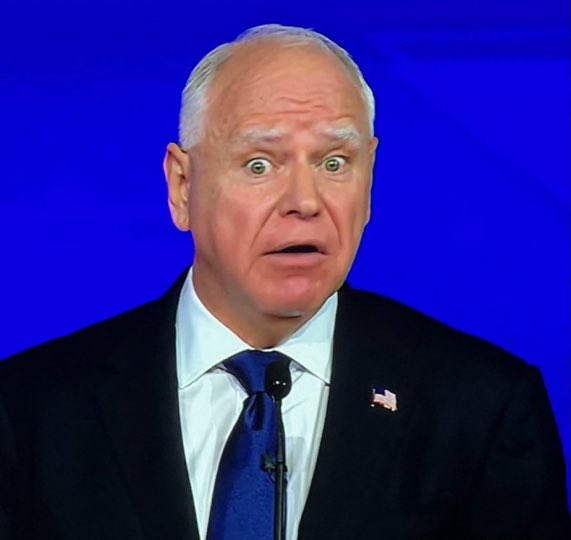
Minnesota Gov. Tim Walz is facing mounting criticism after publicly urging residents to record Immigration and Customs Enforcement (ICE) agents during enforcement operations—remarks opponents argue risk provoking confrontations at a moment of already heightened volatility.
Speaking amid an aggressive federal immigration operation in Minneapolis, Walz called on civilians to document ICE activity, framing the effort as a tool for future legal action against federal authorities.
TIM WALZ: "If you see these ICE agents in your neighborhood, take out that phone and hit record."
"Help us create a database of the atrocities against Minnesotans, not just to establish a record for posterity, but to bank evidence for future prosecution." pic.twitter.com/V7fCMY3WZ1
— Fox News (@FoxNews) January 15, 2026
“If you see these ICE agents in your neighborhood, take out that phone and hit record,” Walz said, according to a clip shared by Fox News. He added: “Help us create a database of the atrocities against Minnesotans, not just to establish a record for posterity, but to bank evidence for future prosecution.”
The Minneapolis mayor, Jacob Frey, took things even further, claiming that “residents” are asking him if police can fight ICE agents.
Frey: "We're in a position right now where we have residents that are asking the very limited number of police officers to fight ICE agents on the street, to stand by their neighbors."
Why would you listen to those people? pic.twitter.com/cXWwYdxtC6
— Greg Price (@greg_price11) January 15, 2026
Law enforcement officials and public safety analysts warn that such rhetoric blurs the line between lawful observation and active interference, particularly when elected leaders frame federal agents as perpetrators rather than officers executing court-authorized duties. Former federal prosecutors note that encouraging residents to confront or “monitor” agents in real time risks confusing civilians about their legal boundaries—especially in fast-moving enforcement situations where officers must make split-second decisions.
Police union representatives have similarly cautioned that public calls to film or challenge federal agents can embolden hostile actors and complicate joint operations, increasing the likelihood of physical confrontations. Critics argue that when state and local leaders portray ICE activity as illegitimate or criminal, they effectively deputize civilians into a political conflict—one that officers on the ground, not elected officials, are forced to navigate in real time.
The comments follow a large-scale federal enforcement action reportedly involving roughly 2,000 ICE agents and come in the aftermath of the fatal shooting of Renee Nicole Good during an ICE operation. Video footage of the incident, reviewed by federal authorities, shows Good striking an ICE officer with her vehicle moments before the shooting—an element critics say has been largely omitted from state leaders’ public framing of the event.
Walz has nonetheless portrayed the operation as an example of federal overreach under the Trump administration’s Department of Homeland Security, led by Secretary Kristi Noem, and has demanded increased state oversight of immigration enforcement. His rhetoric has drawn sharp rebukes from federal officials, who accuse Minnesota of actively undermining public safety by ignoring more than 1,300 detainer requests involving criminal noncitizens.
DHS has defended the Minneapolis operation as necessary and lawful, while state officials argue it has resulted in wrongful detentions and civil liberties violations.
Supporters of the governor argue his call to document ICE reflects a legitimate push for transparency. Civil liberties groups, including the American Civil Liberties Union of Minnesota, have praised the effort as a means of accountability amid what they describe as aggressive federal policing.
But critics contend Walz’s language goes further—encouraging civilians to insert themselves into volatile law enforcement encounters in ways that could escalate tensions or obstruct officers in the field.
This schmuck is actively encouraging confrontations that will inevitably lead to violence. It’s not the job of random people to police law enforcement. Stop pretending this it is a useful activity. Responsible leaders shouldn’t be encouraging it.
There are legal remedies for… https://t.co/hstwhFG6u8
— AG (@AGHamilton29) January 15, 2026
Legal experts note that recording law enforcement in public spaces is generally protected under the First Amendment, provided it does not interfere with official duties. However, they caution that encouraging mass documentation—particularly in charged environments—can heighten the risk of confrontation if participants cross from observation into interference.
While there is no direct evidence that Walz explicitly intends to provoke violence, critics argue his framing—casting ICE activity as “atrocities” and urging residents to actively document agents—functions as an accelerant in an already combustible political climate.
The episode underscores deepening partisan divides over immigration enforcement, with Democratic-led states increasingly clashing with the Trump administration’s hardline deportation strategy. DHS has not yet issued a direct response to Walz’s remarks, though federal officials have previously warned that state-level resistance to enforcement operations endangers both officers and civilians.
On Wednesday night, an ICE officer was attacked by an illegal immigrant and others while trying to apprehend him.
WATCH: @JasonRantz responding on 'CNN NewsNight' to a second ICE-involved shooting in Minneapolis….
"ICE tonight went after someone in a targeted act b/c not only were they in this country illegally, but presumably there was also a crime that was committed. That ICE agent was… pic.twitter.com/gYLgu09XvH
— Curtis Houck (@CurtisHouck) January 15, 2026
Critics immediately connected the violence to Walz’s stance:
A week ago, Renee Good was tragically killed defending exactly the kind of people who attacked ICE tonight with a shovel and broom. Tim Walz says they are going door to door targeting "neighbors of color." That's how they call the pedophiles and murderers being arrested by ICE. pic.twitter.com/cJmsXoBJkp
— Batya Ungar-Sargon (@bungarsargon) January 15, 2026
Walz’s speech was immediately followed up by an attack on ICE vehicles which saw “protesters” break into a lockbox and steal weapons:
🇺🇸 ANTI ICE PROTESTORS STEALS WEAPONS
Rioters in Minneapolis forced open a weapons locker inside a federal vehicle and stole a rifle and ammunition before fleeing the scene.
FBI officials search for those responsible. pic.twitter.com/pclJPoqnDi
— Lord Bebo (@MyLordBebo) January 15, 2026
The approach from Minnesota leaders carries consequences far beyond street-level confrontations. By encouraging civilians to involve themselves in federal enforcement operations—and by casting those operations as criminal “atrocities”—the governor risks creating the kind of disorder that federal law explicitly contemplates under the Insurrection Act. Legal analysts note that the statute exists precisely for moments when state leaders refuse to cooperate with federal authority or actively undermine it, making Walz’s posture not merely inflammatory but legally reckless, especially when Trump has said he’s already considering deploying his constitutional powers and invoking it to protect federal officers.