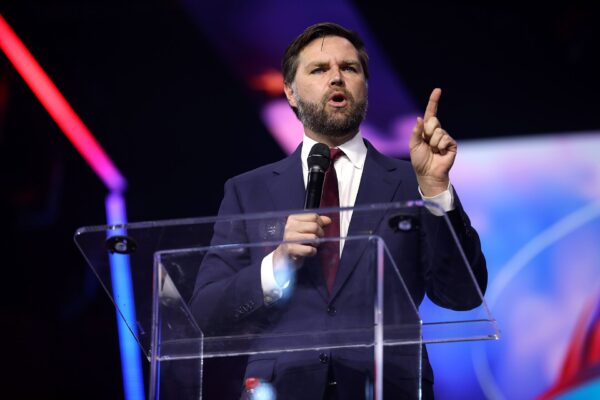
Vice President JD Vance used an appearance on columnist Ross Douthat’s “Interesting Times” podcast to discuss his upcoming book, “Communion,” but much of the conversation centered on the Trump administration’s agreement with Iran and the criticism it has received from some quarters in Israel.
During the exchange, Vance strongly defended the deal and questioned what he described as growing alarm within parts of the Israeli political system. He argued that critics are assuming Iran will receive benefits from the agreement without making any meaningful changes to its behavior, a premise he rejected.
When Douthat asked whether the deal could alter the way Hezbollah operates, Vance responded confidently that it could. He said he has observed what he called a “panic” among some Israeli officials and commentators who appear convinced that any concessions made to Iran will be one-sided.
According to Vance, that concern overlooks how the agreement is structured. He stressed that the United States retains significant leverage through its control over sanctions policy. He noted that sanctions relief would ultimately depend on decisions made by the American government and questioned why anyone would expect sanctions to be lifted if Iran continued supporting terrorist organizations.
Vance said he found the reaction from some Israeli voices unusual, arguing that it reflects a degree of mistrust toward the United States. He maintained that America has been a reliable ally to Israel for many years and suggested that claims the agreement represents a disastrous bargain are unsupported by the facts as he sees them.
Douthat later pressed Vance on whether there is a growing divergence between American and Israeli priorities. He specifically asked whether some Israeli leaders might have incentives to oppose the agreement and what path exists toward reducing Iranian support for Hezbollah and rocket attacks against Israel.
In response, Vance acknowledged that significant portions of Israel’s political establishment and public remain deeply concerned about the deal. However, he argued that misinformation surrounding the agreement has fueled unnecessary fears and contributed to what he characterized as a broader panic.
The vice president said he believes the agreement will ultimately benefit not only the United States but also the broader Middle East and the world. At the same time, he emphasized that the administration’s primary responsibility is to pursue policies that serve American interests.
Vance pointed to President Donald Trump’s willingness to pursue what he sees as America’s priorities even when they do not perfectly align with the goals of Israel’s political system. Disagreements between allies, he said, are inevitable and should not be viewed as extraordinary.
He also noted that he had not seen Israeli Prime Minister Benjamin Netanyahu publicly criticize the agreement. Vance suggested that Netanyahu may be more familiar with the details of the arrangement than some of its critics. Instead, he singled out Israeli politicians Itamar Ben-Gvir and Bezalel Smotrich, both of whom have attacked the deal.
Addressing those critics directly, Vance challenged them to offer a realistic alternative. He argued that military force alone cannot solve every national security challenge facing Israel.
“You can’t just kill your way out of solving every single national security problem that you have,” Vance said.
The vice president pointed to recent American support for Israel, including missile defense systems and military assistance that he said helped protect Israeli lives. He also highlighted what he described as the destruction of Iran’s nuclear program and the concessions Iran is now offering in negotiations.
While acknowledging that questions remain about whether Iran will follow through on its commitments, Vance urged critics to allow diplomacy to continue before rendering judgment. He closed by calling on skeptics to give the United States credit for its longstanding partnership with Israel and to judge the agreement based on results rather than fears about what might happen in the future.
[READ MORE: White House Retires Long-Serving Air Force One as Qatari Jet Nears Presidential Service]