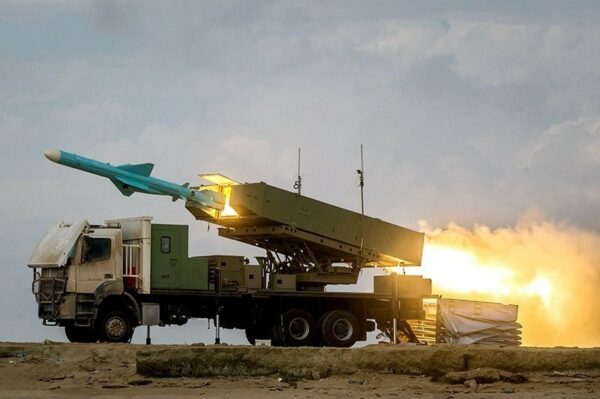
Fox News Chief Foreign Correspondent Trey Yingst reported Wednesday morning that the network has learned a U.S.-contracted vessel was hit earlier in the week during an Iranian drone and missile assault in the Strait of Hormuz, a critical global energy chokepoint that President Donald Trump has declared under U.S. control as his administration works to keep oil flowing through the corridor.
Citing two sources, Yingst reported on social media that the vessel came under attack near the Strait of Hormuz, with the assault involving four Iranian drones and at least one missile. One of the projectiles struck the ship, causing minor injuries, including smoke inhalation among those aboard. The injured are currently being treated in a country in the Gulf region. Yingst noted that U.S. personnel were among those onboard the vessel at the time of the strike.
The revelation lands amid a backdrop of soaring energy prices across the United States, compounding growing alarm over escalating attacks in Saudi Arabia carried out by Yemen’s Iran-backed Houthi rebels.
The Houthis kept up their assault on Wednesday, striking Aramco-operated oil facilities near the Red Sea port city of Yanbu, continuing a pattern of targeting key Saudi energy infrastructure. The militia group has gone further still, threatening to shut down maritime traffic through the Red Sea entirely, a move that would deal an even harsher blow to global oil supply and intensify what is already shaping up to be a serious worldwide energy shock.
The ripple effects are already being felt. Saudi Arabia scrambled this week to reroute millions of barrels of oil after being forced to shut down a critical pipeline that was damaged in a Houthi attack, according to reporting from The New York Times. The shutdown of the East-West pipeline threatens to keep roughly 4 percent of the world’s total oil supply from reaching international markets, a disruption that could send energy prices climbing even further.
Taken together, the developments paint a picture of mounting instability across two of the world’s most vital energy corridors, the Strait of Hormuz and the Red Sea, both of which serve as indispensable arteries for the global flow of oil. With Iranian forces now directly implicated in a strike on a U.S.-contracted vessel and Iran-backed Houthi rebels simultaneously ramping up pressure on Saudi infrastructure, the Trump administration finds itself contending with a two-front energy security challenge just as it has sought to project strength and stability in the region.
The attack on the vessel also raises fresh questions about the safety of shipping lanes through the Strait of Hormuz, a passage through which a substantial share of the world’s oil supply travels daily. Despite Trump’s insistence that the strait remains under U.S. control, this week’s strike underscores the persistent volatility in the region and the risks still facing vessels, including those under U.S. contract, operating in these contested waters.
As energy markets continue to absorb the shock of these developments, all eyes remain on how the administration responds to an increasingly precarious situation unfolding across two critical global chokepoints.
[READ MORE: Trump Admin Moves to Post Signs Outside Smithsonian History Museum Calling Out Alleged Bias]