A fiery warning from Donald Trump toward Iran has triggered sharp criticism from some of his own conservative allies, with commentator Alex Jones leading the charge in unusually direct terms.
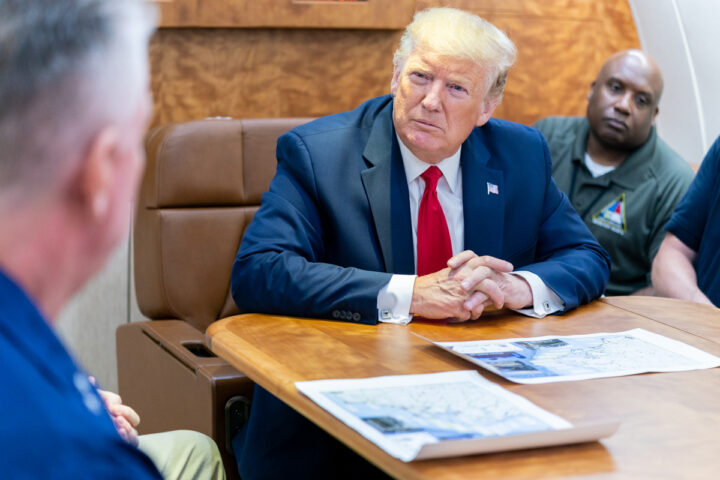
Trump’s remarks came Tuesday in a Truth Social post issued ahead of an 8 p.m. deadline for Iran to reopen the Strait of Hormuz, a vital global trade route. In the post, the president warned that if Iran failed to comply, “a whole civilization will die tonight, never to be brought back again,” while also stating he did not want Iranian civilians to perish, even as he acknowledged that it likely would happen.
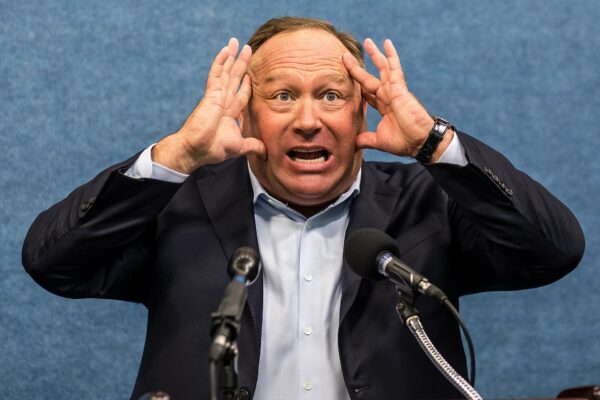
The language, stark even by modern political standards, drew immediate backlash. Jones, long known as a staunch Trump supporter, broke ranks in a video posted to social media, calling the threat “the definition of genocide” and rejecting the idea that such an action could be framed as a defensive war.
“This is not a war,” Jones said, describing it instead as a sweeping bombardment with no meaningful defense for those targeted. He added that even Kim Jong Un “doesn’t talk like this,” warning that such rhetoric risks projecting overwhelming force without clear limits.
Trump’s post also included a more optimistic note, suggesting that Iran’s current leadership might be “different, smarter, and less radicalized” than those before them, raising the possibility that a positive outcome could still emerge. But that message was largely overshadowed by the severity of the warning itself.
The episode highlights growing unease within segments of the president’s conservative base as the U.S.-Israeli war with Iran continues. What began as a show of strength has increasingly prompted questions from some on the right about tone, strategy, and the broader consequences of escalation.
Conservative commentator Tucker Carlson criticized a separate Trump post earlier in the week as “vile on every level,” accusing the president of overstepping in both language and approach. Meanwhile, former Rep. Marjorie Taylor Greene went further, suggesting the invocation of the 25th Amendment, arguing that the United States cannot justify actions that would result in widespread civilian deaths.
Similarly, commentator Candace Owens called for intervention by Congress and the military, describing the situation as having gone beyond acceptable limits.
The 25th Amendment, which governs presidential succession, allows the vice president and a majority of the Cabinet to declare a president unable to carry out the duties of office, temporarily transferring authority. While it has been discussed in past controversies, it has never been used in this way.
Beyond rhetoric, the human cost of the conflict has added to the sense of urgency. Iranian officials have reported that an early U.S. strike involving a Tomahawk missile hit a girls’ school, killing approximately 170 people. A senior United Nations official stated last month that 324 children have been killed in Iran and Lebanon since the war began.
Jones, who was found liable in 2022 for spreading false claims about the Sandy Hook tragedy and ordered to pay $1.4 billion in damages—a ruling later upheld after a failed appeal—acknowledged his past support for Trump, saying he believed “so much good happened” over the past decade. Still, he argued that the president’s recent shift in tone marked a troubling departure.
As tensions escalate, the debate now unfolding on the right reflects a broader question facing the country: how to balance strength and deterrence with the real and often irreversible costs of war.
[READ MORE: Allies Raise Alarm as Trump’s Iran Rhetoric Sparks Fierce Debate]