President Donald Trump is now reportedly facing one of the most consequential foreign policy decisions of his presidency, weighing how to handle Iran’s nuclear program without plunging the United States into a major military conflict, according to a detailed report by The New York Times. With U.S. and Iranian negotiators scheduled to meet in Geneva this Thursday for what advisers are calling a “last-ditch” effort to avoid war, Trump has made clear he is prepared to use every tool at his disposal to stop Tehran from acquiring a nuclear weapon.
The Times report says Trump has told close advisers that if diplomacy fails and even an initial, targeted U.S. strike does not compel Iran to abandon its nuclear ambitions, he would consider a far broader military campaign in the coming months aimed at driving Iran’s leaders from power. Those deliberations reflect stark choices at the highest levels of the U.S. government — with Trump determined to maintain pressure but also wary of the risks, especially after hearing from senior military officials that a strike on Iran would be “far more difficult” than previous operations, such as the one that captured Venezuela’s Nicolás Maduro.
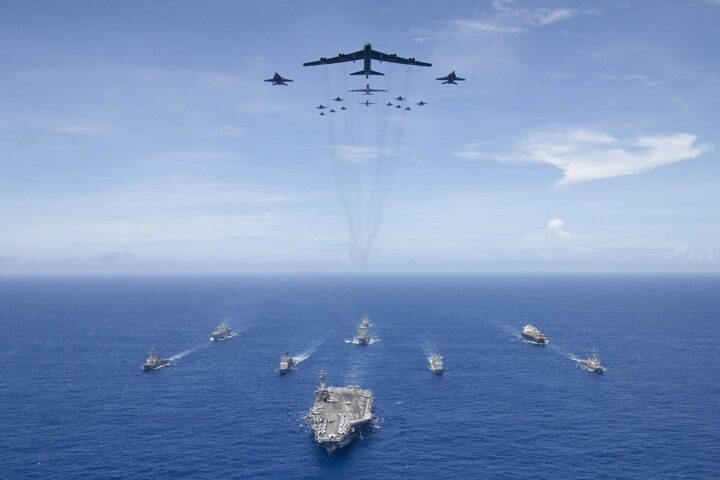
According to the report, Trump has not finalized his decision and continues to explore options ranging from an initial limited strike to larger military action. Potential initial targets under consideration include the headquarters of Iran’s Islamic Revolutionary Guard Corps, its nuclear facilities, and elements of its ballistic missile infrastructure, moves intended to pressure Tehran to agree to U.S. terms without immediately triggering a broader conflict.
But Trump’s advisers are also discussing what might come next if diplomacy and a limited strike are unsuccessful. That could include planning for a much larger operation later in the year, with the goal of radically shifting Iran’s leadership calculus if it continues to defy U.S. demands to halt its nuclear program. Some within the administration have expressed doubts that mere airstrikes could fully dismantle Iran’s capabilities, highlighting the complexity and risks involved.
Both sides are also reportedly weighing a potential “off-ramp” to outright war: allowing Iran to retain an extremely limited nuclear enrichment program for medical research, rather than full weapons capability. This proposal, while far from a complete agreement, could provide a way out if Tehran accepts strict limits that satisfy U.S. negotiators.
The diplomatic push comes amid continued pressure from Trump on Iran to change its posture or face serious consequences. Earlier this month, he warned Tehran that it had a limited window to make a meaningful deal or “bad things” could follow — comments that underscored his willingness to escalate if necessary.
The situation remains fluid as Trump prepares for Thursday’s talks in Geneva, seeking to avoid a costly war while still making clear that the United States will not tolerate an Iranian nuclear threat. His advisers are balancing the demands of diplomacy, military readiness, and strategic pressure on Tehran, all under the spotlight of a region already tense from months of unrest and protests inside Iran.