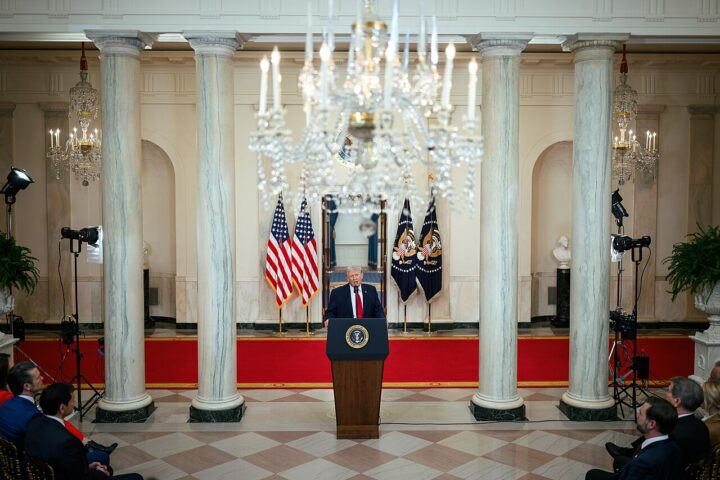
President Donald Trump issued a sharp warning Monday to a “media company” he accused of publishing leaked details about a high-risk U.S. rescue mission in Iran, signaling that his administration may pursue action in the name of national security.
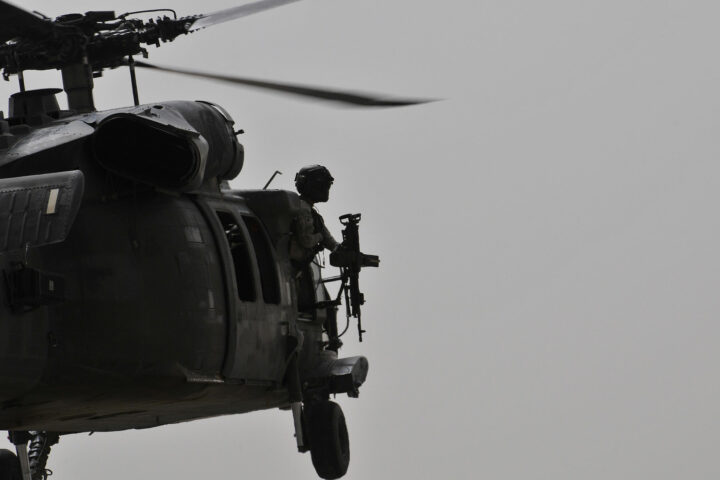
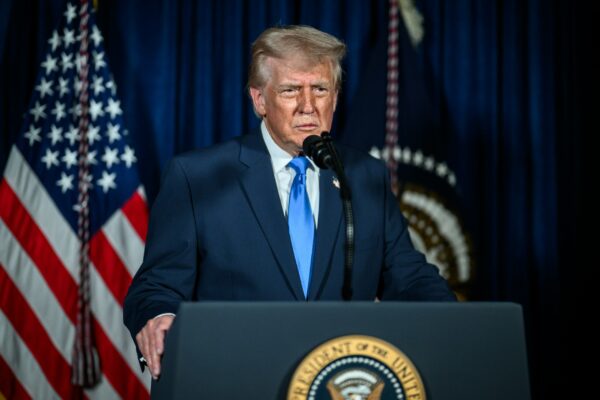
Speaking from the White House, Trump praised American service members for what he described as two “historic” rescue operations that brought home airmen shot down over Iranian territory. He emphasized the danger involved, pointing to the damage sustained by aircraft and the intense conditions faced by crews operating deep in hostile areas.
“These were extraordinary rescues,” Trump said, describing missions that, in his view, are rarely attempted given the risks. He credited the success to the skill of U.S. forces and suggested that, despite heavy fire and damaged equipment, the outcome reflected both preparation and resilience. He also referenced the Easter timing of the mission, saying, “God was watching us,” as he marveled at the aircraft returning despite sustaining hits.
But the president’s tone quickly shifted as he addressed what he called a serious breach of national security. According to Trump, the rescue of the first airman was intended to remain undisclosed until the second had been located. That plan, he said, was disrupted when details of the initial rescue were leaked.
Trump argued that the leak revealed the existence of a second, still-missing pilot, information he said was not previously known publicly. In his telling, that disclosure immediately heightened the danger for the remaining airman and the forces attempting to recover him.
“All of a sudden the entire country of Iran knew,” Trump said, warning that the leak made an already dangerous mission significantly more difficult. He described a scenario in which Iranian forces—and potentially others—became aware that an American pilot was on the ground, “fighting for his life,” and that U.S. aircraft were actively searching for him.
The president went further, claiming that Iran issued a broad notice offering a substantial reward for the capture of the downed pilot. That, he suggested, expanded the threat beyond organized military units to include civilians motivated by the bounty.
“In addition to a hostile… military, we had millions of people trying to get a reward,” Trump said, underscoring the heightened risk environment.
Trump made clear that his administration is actively seeking to identify the source of the leak. He indicated that officials may confront the media organization involved, demanding that it disclose its source or face legal consequences.
“We’re going to go to the media company… and say national security — give it up or go to jail,” Trump said, adding that those responsible for the reporting could face jail time if they refuse to cooperate.
While the president suggested the leaker may not have fully understood the consequences, he described the act as deeply harmful and insisted accountability is necessary. “They put this mission at great risk,” he said.
The comments quickly fueled speculation about which outlet Trump was referencing, though he did not name a specific organization. Reports indicate that Channel 12 was among the first to report details of the initial rescue, with U.S. outlets later confirming the information.
The episode highlights the tension between operational secrecy and public reporting, particularly during active military operations. While the successful recovery of both airmen stands as a notable achievement, the controversy surrounding the leak serves as a reminder that even information shared in real time can carry serious consequences when lives are still on the line—and when events are unfolding in the uncertain fog of war.
[READ MORE: Savannah Guthrie Returns to TODAY After Family Ordeal, Mother Still Missing]