President Donald Trump said Tuesday that Americans will soon get a chance to examine the full text of the recently announced agreement with Iran, responding to mounting calls for transparency as conservatives and commentators press the administration for more details.
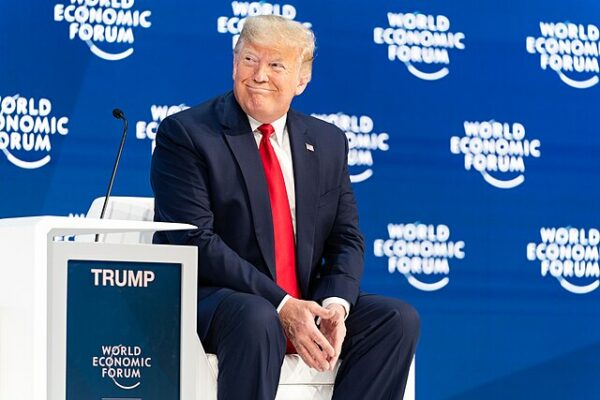
Speaking with reporters at the Group of Seven summit in Évian-les-Bains, France, Trump was asked why the agreement, which he says will help prevent Iran from obtaining a nuclear weapon and reopen the Strait of Hormuz, has not yet been released to the public.
“There’s so much interest in the text of the document,” a reporter noted before asking, “Why not release it?”
Trump made clear that he intends to do exactly that, though he said he wants to unveil the document in a more formal setting.
“Oh, I will,” the president replied. “I’d like to get a formal setting first before we do that. But I have no problem with that.”
The agreement has quickly become a subject of intense debate, particularly among some prominent conservative voices who support a tough approach toward Iran but remain skeptical of an arrangement they have not yet seen.
Radio host and commentator Mark Levin publicly questioned why the memorandum of understanding has not been released, asking, “Why can’t we, the people, see the damn MOU?”
Conservative commentator Ben Shapiro also criticized plans for a Friday event involving Iran’s parliament leader, while Fox News contributor Marc Thiessen sharply questioned reports of a proposed $300 billion reconstruction fund tied to Iran.
The scrutiny highlights a broader demand for details as supporters and critics alike seek to understand the exact terms of an agreement that could shape relations between Washington and Tehran moving forward.
Despite the criticism, Trump forcefully defended the deal, arguing that it accomplishes what he views as the central objective of U.S. policy toward Iran.
“It’s a good document,” Trump said.
The president then offered what he described as the essence of the agreement.
“Here’s what it says: Iran will never have a nuclear weapon,” Trump explained. “That’s what it says. It won’t have one. To buy, to develop. They will not have a new nuclear weapon.”
Trump emphasized that preventing Iran from obtaining a nuclear weapon was the overwhelming priority behind the negotiations.
“And I would say that’s about 99.9% of what I wanted because we couldn’t let that happen,” he said.
In addition to restrictions related to Iran’s nuclear ambitions, Trump highlighted provisions involving the Strait of Hormuz, one of the world’s most strategically important shipping routes.
“In addition to that, the Strait is going to be open toll free, and it’s toll free beyond the 60 days,” the president said.
The agreement is being promoted by the administration as a path away from continued conflict and toward negotiations, though many observers are withholding judgment until the complete text becomes available.
Trump indicated that when the document is released, he plans to go further than simply publishing it online.
According to the president, he intends to personally walk through the agreement in detail before the public and the media.
“I’ll not only release it,” Trump said. “I’ll probably have a press conference and read it to you word by word so that the press covers it accurately because it’s a very important document.”
The president also contrasted the new agreement with the Obama-era Joint Comprehensive Plan of Action, arguing that the earlier arrangement posed significant risks for the region.
Referring to the JCPOA, Trump called it a “horrible” agreement and said it “could have destroyed the Middle East.”
Trump concluded by saying the public unveiling would likely occur soon.
The planned press conference, he said, will take place in “a couple of days,” giving Americans their first opportunity to examine the agreement for themselves and assess the deal at the center of an increasingly heated political debate.
[READ MORE: Trump Tells Netanyahu To Be More Responsible]