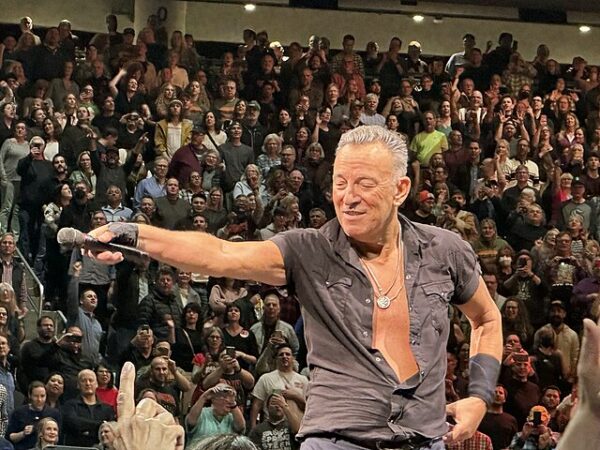
President Donald Trump took aim at rock icon Bruce Springsteen in a fiery Thursday morning post on Truth Social, escalating a public feud that highlights the deep cultural and political divides shaping the national conversation.
Trump’s remarks came in response to Springsteen’s recent concert in Minneapolis, where the longtime musician and outspoken critic of the president delivered a pointed critique of the administration and its policies. The president did not hold back, calling Springsteen a “total loser” and accusing him of suffering from what he described as “Trump Derangement Syndrome.”
In the same post, Trump mocked Springsteen’s appearance and dismissed his musical talents, describing him as a “bad, and very boring singer.” The president also urged his supporters to boycott the performer’s concerts, telling Americans to “save your hard earned money” rather than attend what he called “overpriced” shows.
Trump used the moment to contrast his political standing with Springsteen’s criticism, pointing to his 2024 election victory as validation of his leadership. He described the win as a landslide, emphasizing success across the popular vote, swing states, and counties nationwide. In his view, attacks from figures like Springsteen reflect broader opposition from critics unwilling to accept that outcome.
Springsteen, for his part, has long been a vocal critic of Trump and a prominent supporter of Democratic causes. During his Minneapolis performance, he delivered a stark assessment of the current administration, arguing that its actions are damaging the nation’s global standing and core identity.
“This White House is destroying the American idea and our reputation around the world,” Springsteen told the crowd. He went on to say that, in the eyes of many, the United States is no longer seen as a defender of democracy, but rather as a “reckless, unpredictable, predatory rogue nation.”
The musician’s criticism extended to the administration’s immigration policies, including its approach to mass deportations. Earlier this year, Springsteen released a song titled “Streets of Minneapolis,” which centers on the fatal shootings of two American citizens by federal immigration officials in the city. The song and his remarks have added to his broader critique of the administration’s direction.
The exchange between Trump and Springsteen underscores how political disagreements increasingly spill into the cultural arena, where artists and public figures use their platforms to influence public opinion. For supporters of the president, Trump’s response may be seen as a direct pushback against what they view as elite criticism from entertainment figures. For others, the tone of the exchange reflects a broader coarsening of public discourse.
At a time when the nation is also grappling with major policy debates and an ongoing international conflict, the clash serves as a reminder that even cultural moments can quickly take on political weight. While neither side appears likely to back down, the episode highlights the widening divide between political leadership and influential voices in American culture—one that continues to shape how Americans see both their government and each other.