President Donald Trump on Tuesday took aim at the BBC, accusing the international broadcaster of spreading “inaccurate” reporting about the ongoing U.S. and Israeli military campaign against Iran, while also revisiting his high-profile legal fight against the network.
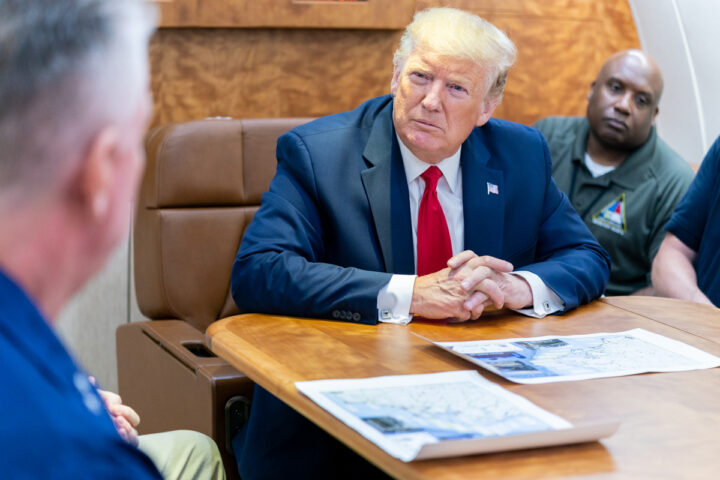
The remarks came as Trump hosted Irish Prime Minister Micheál Martin at the White House in celebration of St. Patrick’s Day. During a press exchange, the president was asked about the status of his lawsuit against the BBC, a case that has become a flashpoint in his broader criticism of legacy media outlets.
Trump filed a $10 billion defamation lawsuit against the BBC in December, alleging the network manipulated a speech he delivered prior to the January 6 Capitol riot. According to Trump, the edited version included statements he never made. The BBC later sought to halt discovery in the case, but a U.S. judge denied that request in February, allowing the legal process to continue.
Reflecting on the dispute, Trump did not hold back.
“Well, the BBC was incredible,” he said. “What they did is they had me speaking something I never said, and I’ve never seen anything quite like it.”
The president claimed the network used artificial intelligence to generate remarks and attribute them to him — something he said even caught members of his own team off guard.
“They actually had, they put words in my mouth and they said I said some pretty bad things, and I didn’t say them,” Trump said. “It was AI-generated. And I said, ‘I never said that.’”
Trump added that some of his aides initially believed the statements were real, underscoring his concern about how such technology can blur the line between fact and fabrication in modern media coverage.
While he briefly referenced other past media disputes, Trump suggested that the BBC’s actions went further than what he has encountered before. He also indicated that the network had acknowledged making a mistake, though he remained sharply critical of its conduct.
The president then turned to the present, explaining that he had recently watched the BBC’s coverage of the war in Iran “for some crazy reason.” What he saw, he implied, did little to restore his confidence.
Though Trump did not elaborate in detail, his remarks signaled frustration with how the conflict is being portrayed by international outlets at a time when tensions remain high and the stakes continue to grow.
The exchange reflects a familiar theme in Trump’s presidency: an ongoing battle with major media organizations over accuracy, bias, and accountability. For his supporters, such criticisms reinforce long-standing concerns about how global institutions cover American actions abroad. At the same time, moments like this highlight the challenge of navigating both a complex military conflict and an increasingly fragmented information landscape.
As the war with Iran continues, so too does the debate over how it is reported — and whether the public is getting a clear picture of events. Even as the administration projects confidence in its approach, disputes over media coverage serve as a reminder that in times of war, information itself can become another contested front.
[READ MORE: Kushner’s Dual Roles Draw Scrutiny as He Seeks Billions While Serving as Trump Envoy]