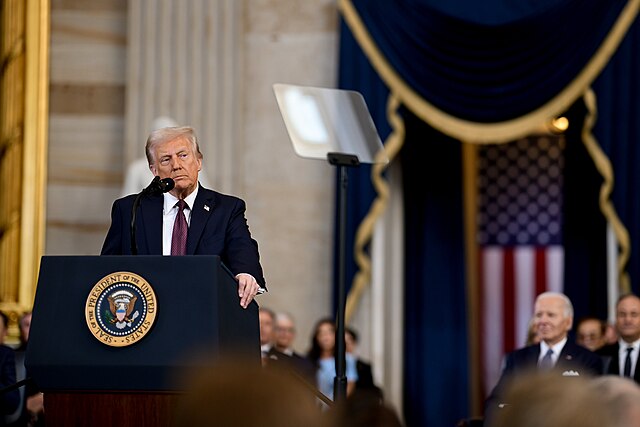
President Donald Trump announced Wednesday that the United States would work directly with Iran to remove what he described as “nuclear dust,” marking another unexpected development in the fragile ceasefire between the two countries.
In a morning post on Truth Social, Trump said the U.S. would “work closely with Iran” following what he characterized as a “very productive Regime Change.” He added that uranium enrichment would not be permitted and emphasized that both nations would cooperate in locating and removing material left behind from recent strikes.
“The United States will, working with Iran, dig up and remove all of the deeply buried (B-2 Bombers) Nuclear ‘Dust,’” Trump wrote, underscoring the administration’s focus on eliminating any remaining nuclear-related remnants. He also noted that the sites in question have been under continuous satellite surveillance, crediting the Space Force for maintaining what he described as precise oversight. According to the president, nothing has been disturbed since the initial attack.
The remarks suggest a rare moment of coordination between Washington and Tehran, even as deep mistrust continues to define the broader relationship. Trump paired his comments about cooperation with a firm reiteration of U.S. demands, stating unequivocally that there would be “no enrichment of uranium.”
Alongside the nuclear cleanup effort, Trump indicated that discussions surrounding tariffs and sanctions relief are already underway. He noted that many elements of a broader 15-point framework have been agreed to, signaling that negotiations may be progressing faster than expected in the wake of the ceasefire.
At the same time, the president made clear that any easing of economic pressure would be carefully conditioned—and that enforcement would remain a central priority.
In a separate post, Trump issued a warning to countries supplying military equipment to Iran, announcing that such nations would face immediate economic consequences. Specifically, he said any country providing weapons to Tehran would be subject to a 50% tariff on all goods exported to the United States, with no exceptions or exemptions.
The dual messaging reflects an approach that combines outreach with deterrence. On one hand, the administration is signaling a willingness to engage directly with Iran on specific issues, including nuclear cleanup and potential economic relief. On the other, it is reinforcing strict red lines and threatening swift penalties for actions that could undermine U.S. objectives.
The proposal to jointly address nuclear remnants comes at a sensitive moment, as both sides navigate the early stages of a ceasefire that has raised hopes for a broader agreement. Yet the situation remains complex. Cooperation on technical matters does not erase the underlying tensions, nor does it guarantee long-term alignment.
For many observers, the idea of working alongside a longtime adversary may appear pragmatic, particularly when it comes to securing and removing potentially dangerous materials. At the same time, it raises questions about how such coordination would function in practice—and whether it can be sustained.
As negotiations continue, the administration’s strategy appears to rest on a careful balance: pursuing limited areas of cooperation while maintaining firm pressure where it matters most. Whether that balance leads to lasting stability or simply reflects a temporary convergence of interests remains uncertain.
For now, the ceasefire has opened the door to dialogue—but as the president’s own statements make clear, the path forward is likely to be anything but simple.
[READ MORE: Trump Says He Will Slap Tariffs On Anyone Supplying Iran With Weapons]