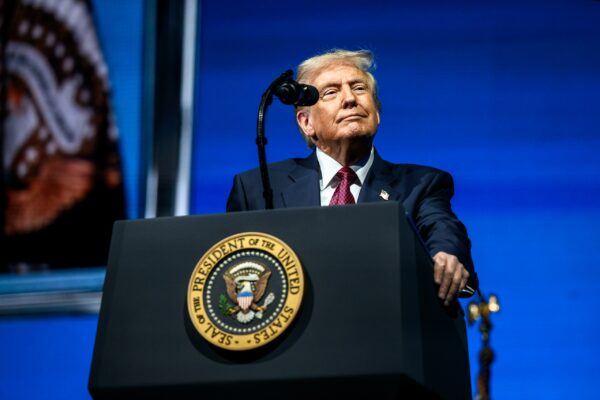
President Donald Trump said Wednesday that he would accept the results of the upcoming midterm elections “if the elections are honest,” while warning that if they are not, “something else has to happen,” reigniting debate over election integrity and federal oversight.
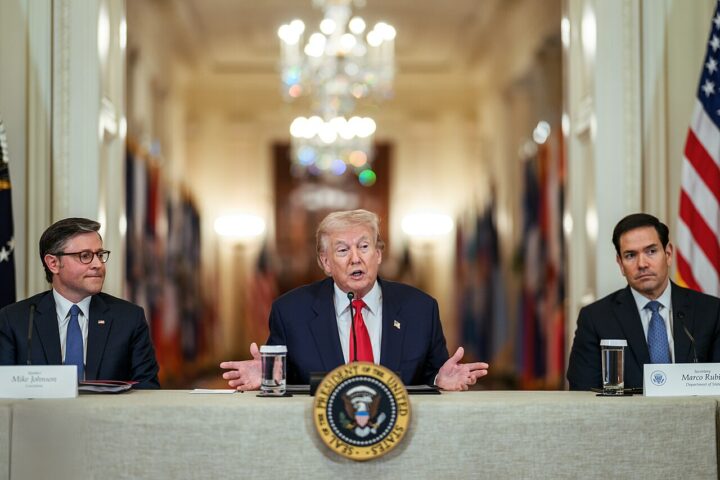
Trump made the remarks during a pre–Super Bowl interview in the Oval Office with NBC Nightly News anchor Tom Llamas. The exchange followed criticism of Trump’s recent suggestion that Republicans should “nationalize” the voting process, a claim the president flatly rejected.
“I didn’t say ‘nationalize,’” Trump told Llamas. Instead, he said he was pointing to what he described as deeply flawed election systems in specific parts of the country. Trump named cities including Detroit, Philadelphia, and Atlanta, arguing that some jurisdictions have elections that are “extremely corrupt” and “unbelievably corrupt.”
The president said the core issue is not federal power for its own sake, but the need to ensure elections are conducted honestly and competently. He argued that if states or localities fail to administer elections in a fair, timely, and transparent manner, stronger measures may be necessary.
Trump zeroed in on voter identification laws as a prime example. He questioned why Democrats consistently oppose voter ID requirements, arguing that such opposition undermines confidence in elections. According to Trump, Democrat voters themselves support voter ID, while Democrat politicians resist it.
“If Democrats don’t want voter ID, that means they want to cheat,” Trump said, adding that there is no legitimate argument against verifying a voter’s identity. He said elections cannot be allowed to continue under systems that invite abuse and distrust.
Trump suggested that if elections cannot be run honestly under state control, federal involvement may become unavoidable. He described election administrators as agents who effectively “accumulate the votes” to determine winners, and warned that if they cannot perform that role properly, alternative solutions would have to be considered.
The president’s comments appeared to echo statements made earlier this week by White House Press Secretary Karoline Leavitt, who said Trump was referring to the SAVE Act when discussing election reforms. The legislation would require proof of citizenship to register to vote. Trump had addressed the issue during an appearance on former FBI Deputy Director Dan Bongino’s podcast, prompting backlash from critics.
Many of those critics accused Trump of signaling an intent to interfere with future elections, a concern Llamas raised directly. He asked whether Trump would trust the outcome of the midterms if Republicans were to lose control of Congress.
Trump responded that he would accept the results if the process was legitimate. However, he reiterated his belief that cheating has occurred in recent elections, including in 2024, which he described as another example of a flawed system.
“I will, if the elections are honest,” Trump said. He added that he had little reason to complain personally, pointing to his most recent victory as decisive. Trump noted that he won all seven swing states, carried 84 percent of the counties nationwide, and produced what he described as an overwhelmingly red electoral map.
Trump acknowledged that while he believes there was cheating, the margin of victory was too large to overturn. “It was too big to rig,” he said.
The president’s remarks underscored a familiar theme of his political career: a forceful insistence on election integrity and skepticism toward systems he says fail to protect it. While critics continue to sound alarms, Trump framed his position as a defense of honest elections and voter confidence—conditions he says must exist for any result to be accepted.