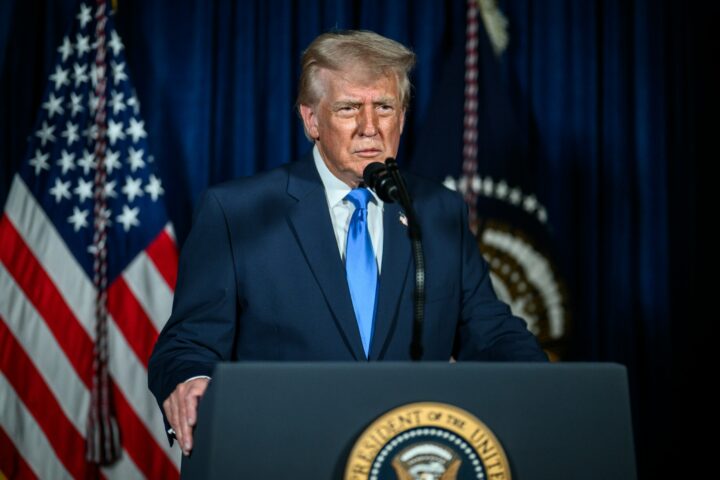
President Donald Trump on Friday raised the prospect of a dramatic shift in U.S.–Cuba relations, floating the possibility of what he called a “friendly takeover” of the island nation as high-level talks continue behind the scenes.
Speaking to reporters before departing the White House for Corpus Christi, Texas, Trump cast Cuba as a regime buckling under the weight of economic collapse. The island, he said, is grappling with severe shortages of cash, oil, and food — conditions he described as placing the government “in deep trouble.” According to the president, Havana has quietly turned to Washington.
“The Cuban government is talking with us,” Trump said. “They’re in a big deal of trouble, as you know. They have no money, they have no anything right now. But they’re talking with us.”
Then came the line that immediately ricocheted through diplomatic circles.
“Maybe we’ll have a friendly takeover of Cuba.”
He repeated the phrase for emphasis: “We could very well end up having a friendly takeover of Cuba.”
Trump: "Maybe we'll have a friendly takeover of Cuba. We could very well end up having a friendly takeover of Cuba." pic.twitter.com/YCI8WcxzBG
— unusual_whales (@unusual_whales) March 2, 2026
Trump offered no clarification of what such a “friendly takeover” would entail — whether economic restructuring, political transition, or some novel hybrid arrangement. Nor did he outline any formal framework for negotiations. He did, however, note that Secretary of State Marco Rubio is leading discussions with Cuban officials “at a very high level,” signaling that contacts between the two governments are active and ongoing.
Earlier this week, Cuban authorities reported a deadly confrontation off the island’s coast involving a U.S.-registered speedboat. According to Havana, individuals aboard the vessel opened fire on Cuban border guard troops during what officials described as an attempted infiltration for “terrorist purposes.” Four people on the boat were killed. Six others were injured and detained.
U.S. officials confirmed that at least one American citizen was among those killed and another was injured. In the aftermath, Rubio said the United States was working to independently verify the sequence of events. Cuban authorities stated Thursday that they are sharing information with Washington through established diplomatic channels.
The maritime clash follows Trump’s January 29 executive order declaring a national emergency tied to Cuba’s policies and conduct. In that order, he characterized the Cuban government’s actions as posing an “unusual and extraordinary threat” to U.S. national security and foreign policy. The directive authorized additional tariffs targeting imports from any country that supplies oil to Cuba — a move designed to constrict fuel flows to the island and intensify economic pressure.
The administration argues that tightening the screws on Havana is necessary to force structural change. Critics contend the strategy risks worsening conditions for ordinary Cubans already battered by shortages and inflation.
For now, the White House is offering few specifics. The president declined to provide further updates on the boat incident during his Friday comments and did not expand on what form any potential arrangement with Cuba might take.