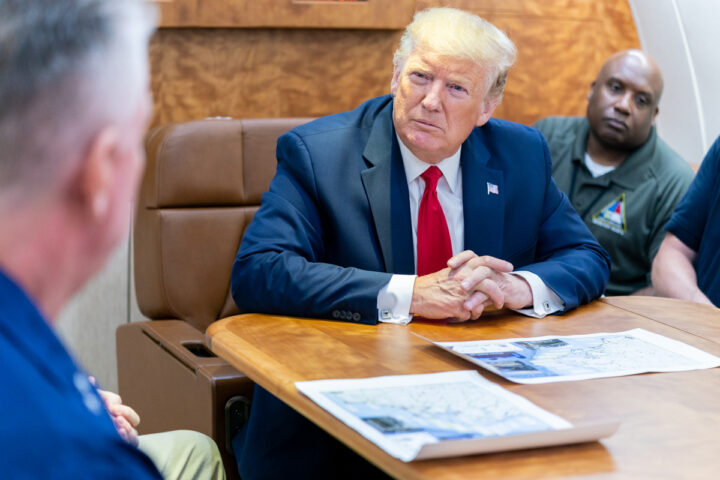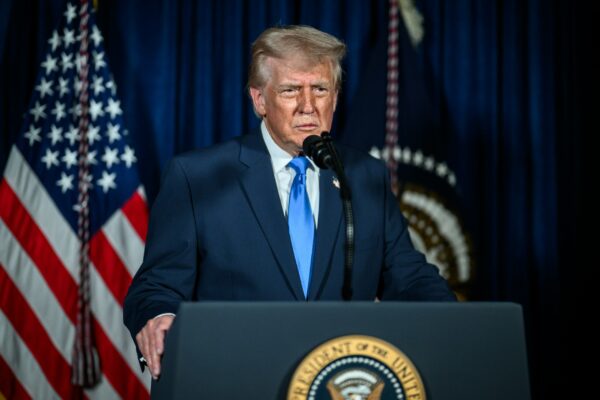
President Donald Trump on Tuesday unleashed a fiery broadside against America’s NATO allies, accusing them of failing to stand with the United States after they declined to join the ongoing U.S.-Israeli military campaign against Iran.
The president’s remarks, posted on Truth Social, came at a moment of heightened tension abroad and political friction at home. Notably absent from Trump’s message was any acknowledgment of the sudden resignation of administration official Joe Kent, who stepped down earlier in the day in protest of the war effort.
Instead, Trump turned his focus outward, expressing frustration with allies he says have long relied on American strength while offering little in return. In his post, Trump said the United States had been informed that most NATO countries would not participate in the military operation, despite broadly agreeing that Iran must not be allowed to obtain a nuclear weapon.
“I am not surprised,” Trump wrote, arguing that NATO has functioned as a “one way street,” with the U.S. spending vast sums to protect allied nations while receiving limited support in moments of crisis.
At the same time, the president pointed to what he described as sweeping military success against Iran, claiming its naval, air, and defense capabilities had been effectively dismantled. Trump suggested that, given those gains, the United States no longer needs assistance from NATO or other allies such as Japan, Australia, or South Korea.
The message marked a sharp shift in tone from just days earlier. On Sunday, Trump had openly called on NATO countries to step up and help secure the Strait of Hormuz after Iran moved to close the vital waterway in response to U.S. airstrikes.
“I’m demanding that these countries come in and protect their own territory,” Trump said at the time, emphasizing that many of the nations reluctant to act depend heavily on Middle Eastern energy supplies. He framed the request as a modest one, describing the mission as simply keeping a key shipping route open.
The contrast between Sunday’s appeal and Tuesday’s defiance underscores a broader tension that has emerged as the conflict deepens: the challenge of sustaining international cooperation in a fast-moving military crisis.
Critics argue that the administration’s approach may have complicated those efforts. Former national security adviser John Bolton took aim at Trump’s handling of the situation, suggesting that the president failed to adequately consult with allies before launching operations.
Bolton said that while prior consultation would not necessarily have secured participation, it could have helped prepare allied nations for the risks — particularly the potential closure of the Strait of Hormuz, a critical artery for global energy supplies.
“We didn’t do that with the NATO allies,” Bolton said, adding that Gulf Arab states and key Pacific partners were also left out of early discussions.
The episode highlights a recurring debate in American foreign policy: how to balance decisive military action with the need for coordination among allies. While the administration has emphasized strength and speed, the lack of unified backing from longstanding partners raises questions about the long-term sustainability of the effort.
As the situation unfolds, the divide between Washington and its allies may prove as consequential as developments on the battlefield itself — a reminder that even overwhelming force abroad can come with complex and costly trade-offs.
[READ MORE: Kushner’s Dual Roles Draw Scrutiny as He Seeks Billions While Serving as Trump Envoy]