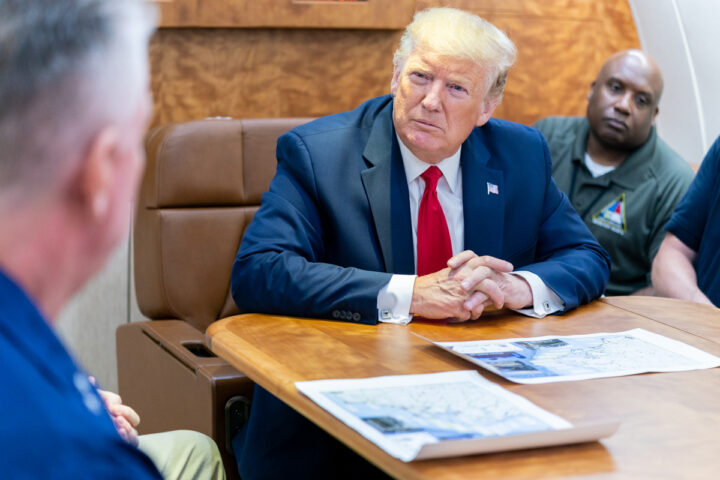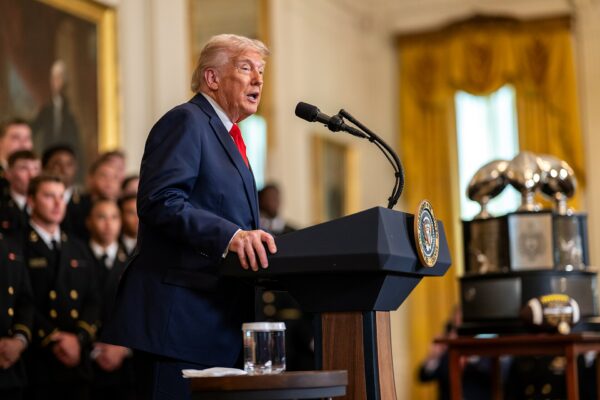
President Donald Trump’s approval rating is on the rise again, reaching 41 percent in a new Reuters/Ipsos survey released Tuesday. The bump follows a renewed focus by the president on affordability and cost-of-living issues—areas where Republicans appear to be giving him growing credit even as overall numbers remain mixed.
The latest poll marks a 3-point increase from the 38 percent approval rating recorded late last month, when Trump dipped below 40 percent for the first time since January. Prior to that brief drop, Trump had held steady at 40 percent in late October and early November after climbing to 42 percent in mid-October.
He began his second term at 47 percent, and the new uptick signals that Republican voters in particular are responding to his economic message.
While cost of living has consistently been one of Trump’s weakest-performing issues with the broader electorate—drawing just 31 percent approval overall—the survey shows a notable rebound among Republicans. GOP support for the president’s handling of rising costs climbed to 69 percent, a sharp improvement from the 59 percent recorded late last month, which had been the lowest of his second term. The new number reflects returning confidence among his base, narrowing the gap between Trump’s performance on this issue and the stronger marks he has historically received on broader economic management.
Republican approval of Trump’s handling of the economy now sits at its highest point since late August, when 70 percent backed his approach—matching the support he received upon returning to the White House in January. Support for his handling of cost-of-living issues had previously peaked at 74 percent in May, indicating that the president’s renewed emphasis on household affordability may be resonating with voters who want him to focus on everyday economic pressures.
The effort comes after Democrats swept last month’s elections, victories widely attributed to their messaging around economic concerns. Trump has since shifted attention back to the kitchen-table issues that helped fuel his political rise, positioning himself as the one prepared to confront rising costs head-on. The boost among Republicans suggests that strategy may be stabilizing his support at a critical moment.
The Reuters/Ipsos survey included 4,434 adults and was conducted December 3–8, carrying a margin of error of 2 percentage points. While Trump’s overall standing remains below where it began at the start of his second term, the new numbers show he is regaining lost ground—particularly where it matters most for any administration seeking to project strength: within his own party.
As Trump continues amplifying his message on affordability and economic relief, the question now is whether these rising marks among Republicans can eventually translate into broader approval from independents and undecided voters. For the moment, however, the president is seeing a clear sign that his core supporters are rallying behind his economic leadership once again.
[READ MORE: Trump Heads to Pennsylvania to Promote Economic Agenda as GOP Faces Rising Cost Pressures]