The Trump administration announced Tuesday that the Department of Justice will no longer pursue civil rights cases based on “disparate impact theory,” marking a major shift away from decades of federal policy that allowed lawsuits over so-called “race neutral” practices even when no evidence of intentional discrimination existed.
For more than 50 years, disparate impact theory has enabled activists and government lawyers to allege discrimination simply because different demographic groups experienced different outcomes—regardless of whether any discriminatory act or policy could be identified. The Justice Department said that approach is coming to an end.
“For decades, the Justice Department has used disparate-impact liability to undermine the constitutional principle that all Americans must be treated equally under the law,” Attorney General Pam Bondi said. “No longer. This Department of Justice is eliminating its regulations that for far too long required recipients of federal funding to make decisions based on race.”
The department issued a new rule removing disparate impact considerations from Title VI of the Civil Rights Act of 1964, which governs discrimination claims tied to entities receiving federal funds. Title VI already prohibits discrimination based on race, sex, religion, and national origin, but disparate impact had allowed lawsuits to proceed without proving discriminatory intent—something critics argued encouraged race-based policymaking rather than true equality.
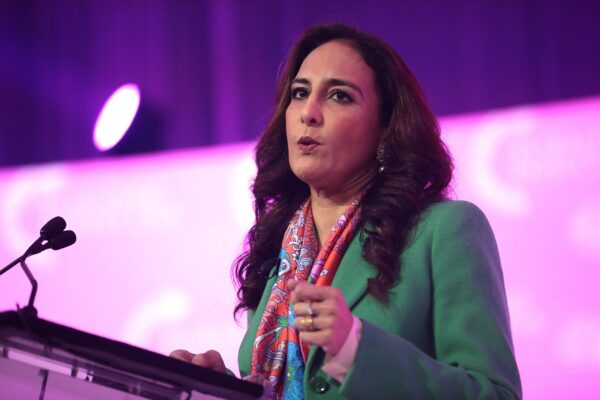
Assistant Attorney General Harmeet Dhillon echoed those concerns. “The prior ‘disparate impact’ regulations encouraged people to file lawsuits challenging racially neutral policies, without evidence of intentional discrimination,” she said. “Our rejection of this theory will restore true equality under the law by requiring proof of actual discrimination, rather than enforcing race- or sex-based quotas or assumptions.”
The move follows an April executive order from President Donald Trump directing federal agencies to stop relying on disparate impact theory altogether. The order described the concept as the “presumption” of discrimination whenever racial or gender disparities exist—even when no biased policy or intent can be shown. Trump argued the theory actively undermines America’s commitment to merit, fairness, and a truly colorblind society.
“It is the policy of the United States to eliminate the use of disparate-impact liability in all contexts to the maximum degree possible to avoid violating the Constitution, Federal civil rights laws, and basic American ideals,” Trump wrote.
The shift stands in sharp contrast to the Biden administration’s approach. Last year, President Joe Biden’s Justice Department attempted to enforce disparate impact claims in Louisiana—but the courts blocked the effort, a sign of growing judicial skepticism toward the theory nationwide.
Supporters of the change say returning civil rights enforcement to a standard based on actual discriminatory intent—not statistical disparities—represents a restoration of equal justice rather than preferential treatment. Critics of disparate impact have long argued that the framework pressures schools, employers, and public agencies to make race-based decisions simply to avoid lawsuits, even when their policies treat everyone the same.
With this rule change, the Justice Department is making clear it intends to move away from that model and back toward a civil rights standard rooted in fairness, individual equality, and constitutional principles.
[READ MORE: Trump To Begin Interviews For Fed Chairman]