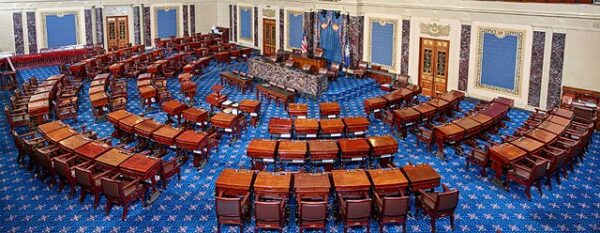
The Senate on Friday approved a short-term extension of the federal government’s warrantless surveillance authority, buying lawmakers more time but doing little to resolve the growing divide over how those powers should be used.
The 10-day extension, which now heads to President Donald Trump’s desk, pushes the expiration of Section 702 of the Foreign Intelligence Surveillance Act (FISA) to April 30. The provision, which allows the government to monitor foreign targets abroad, has become a flashpoint in Congress as concerns mount over its reach and potential impact on Americans.
The move follows a turbulent stretch in the House, where lawmakers rejected a broader deal that had been negotiated with skeptics. That breakdown forced a last-minute shift, with leaders opting for a temporary fix rather than risking a lapse in surveillance authorities altogether.
For now, the extension ensures continuity in intelligence operations. But the underlying debate remains unresolved, and Section 702 is expected to dominate discussions on Capitol Hill in the days ahead.
At the heart of the dispute is a familiar tension: how to balance national security priorities with the protection of civil liberties. While the law is designed to target foreign individuals located outside the United States, critics have long warned that Americans’ communications can be incidentally collected when they interact with those under surveillance.
Those concerns have fueled calls for reform from lawmakers across the political spectrum. Many are pushing for additional safeguards to ensure that Americans are not caught up in surveillance efforts without stronger protections.
Trump, however, has taken a firm stance in favor of maintaining the program as is. The president has publicly called for an 18-month extension of Section 702 without any new restrictions, arguing that the authority is essential for national security.
That position has drawn resistance from within his own party. Some conservative lawmakers have expressed unease about the scope of the program, signaling that support for a clean extension is far from unanimous among Republicans.
The legislative path forward remains uncertain. After a series of delayed votes and closed-door negotiations, the House was unable to pass a compromise agreement that had been worked out between leadership and members of the House Freedom Caucus. Complicating matters further, some of the very lawmakers involved in crafting the deal ultimately declined to support it, alongside members of the House Intelligence Committee who favor a straightforward renewal.
With no clear consensus, Congress now faces a narrow window to reach a longer-term solution before the new deadline.
Democrats, for their part, have argued that the failed vote highlights the need for bipartisan cooperation. Lawmakers on the left have also emphasized the importance of reforms, aligning in some respects with privacy-focused conservatives who share concerns about the breadth of surveillance authorities.
In the Senate, similar sentiments have emerged. Ron Wyden has called for changes to be included in any extended authorization, reflecting a broader push among privacy-minded legislators to tighten oversight.
The result is a rare convergence of concerns from both sides of the aisle, even as disagreements persist over how to address them.
As the debate continues, the episode serves as a reminder that even widely supported national security tools can face scrutiny when questions arise about their limits. In a world shaped by ongoing international tensions, the pressure to maintain strong intelligence capabilities is clear—but so too is the risk that, without careful restraint, those same tools could extend further than many Americans believe they should.
[READ MORE: Trump Says Don’t Panic Over Oil Prices]