A heated exchange on CNN this week underscored a growing reality in Washington and beyond: even some Republican voices are acknowledging that President Donald Trump’s war in Iran has had tangible economic consequences at home, particularly at the gas pump.
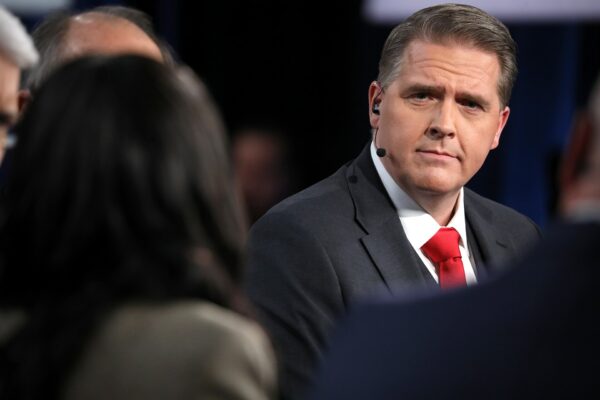
During Thursday’s edition of CNN NewsNight, GOP analyst Scott Jennings openly conceded what critics have been arguing for weeks—that the president initiated a conflict that contributed to rising fuel prices. At the same time, Jennings framed the decision as justified, calling it “for a worthy cause,” a position that reflects a broader debate within conservative circles about balancing national security priorities with economic strain.
The discussion came as the Trump administration faced another round of troubling economic news. Wholesale inflation reportedly came in more than twice as high as expected, adding pressure to an already fragile economy. The ongoing conflict with Iran has coincided with a sharp increase in gas prices, a reality that is increasingly difficult for policymakers and commentators to sidestep.
CNN anchor Abby Phillip pressed the issue directly, asking panelists to address whether Trump’s actions were linked to the spike in fuel costs. When panelist Lydia Moynihan attempted to draw comparisons to the global fallout from Russia’s invasion of Ukraine—where rising gas prices were widely attributed to Vladimir Putin—Phillip cut through the analogy with a pointed question: “Did President Trump initiate a war that led to higher gas prices?”
After some back-and-forth, Jennings gave a straightforward answer. “Look, the answer is yes,” he said, acknowledging the connection between the administration’s military decision and the economic ripple effects.
But Jennings quickly pivoted to a broader political argument, suggesting that the real question isn’t simply causation, but justification. “The question is, was it a worthy cause?” he added, reframing the issue in terms that resonate with supporters of the administration’s hardline approach to Iran.
Phillip, however, pushed back on that reframing, emphasizing that the discussion at hand was about responsibility for rising prices, not the merits of the military action itself. She noted that the administration appeared to move forward with the strikes despite the known risk of higher fuel costs, calling it a deliberate choice with foreseeable consequences.
Moynihan continued to argue that assigning blame for gas prices has been inconsistently applied, pointing out that media coverage during the Ukraine conflict often placed responsibility on Russia. “Why can’t we blame Iran?” she asked, suggesting that external actors should bear the brunt of the criticism.
Phillip acknowledged that perspective but maintained that the United States made a conscious decision to act, fully aware of the potential economic fallout. “I’m not saying that’s a bad decision,” she said, “I’m just saying that’s a choice that we made knowing that this was likely going to be the outcome.”
The uncertainty surrounding the duration of the conflict added another layer of concern. Phillip noted that Trump has suggested the situation will be brief, but warned that if that assessment proves wrong, the consequences could escalate significantly.
As the panel made clear, the debate is no longer just about foreign policy—it’s about how decisions made overseas are felt by Americans at home. While some continue to argue that the mission is justified, even its defenders are increasingly acknowledging that war, however it is framed, comes with real and immediate costs.
[READ MORE: Comey Called To Testify To Grand Jury]