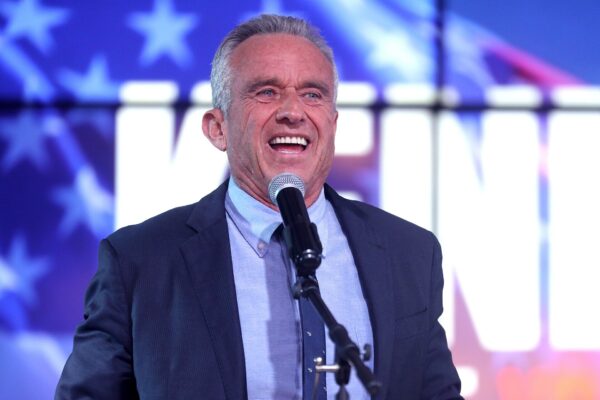
Robert F. Kennedy Jr., President Donald Trump’s much-debated secretary of health and human services, is showing unexpectedly strong public support despite sustained criticism from political figures and the medical establishment. A new Harvard-Harris poll conducted December 2–4 among 2,204 registered voters found Kennedy to be one of the most favorably viewed political figures tested — a result that contradicts months of media narratives insisting his views are “fringe.”
According to the poll, Kennedy secured a 43% favorable rating compared to 40% unfavorable, giving him a net positive approval of 3%. The only figures scoring comparably well were Secretary of State Marco Rubio, Vice President JD Vance, and California Gov. Gavin Newsom — notable company for a health secretary routinely attacked by lawmakers on both sides of the aisle.
Vice President Vance received an even split, with 40% viewing him favorably and 40% unfavorably. President Trump’s own ratings sat at 45% favorable and 49% unfavorable — stronger numbers than many past presidents have held at this point in their second term, but still reflecting the current polarized political climate.
Kennedy’s performance is particularly remarkable given the controversy surrounding his views on vaccines. Critics, including Republican Sen. Bill Cassidy of Louisiana, a licensed physician, have repeatedly condemned Kennedy’s position linking vaccines and autism. Cassidy blasted the idea on CNN, calling it “fringe” and asserting that “vaccines are safe” and “quite well proven” not to be associated with autism.
Media outlets and Democratic lawmakers have echoed similar attacks, insisting Kennedy’s questioning of pharmaceutical orthodoxy places him outside mainstream policy debate. Yet the poll suggests Kennedy’s message is resonating far more broadly with the American public than Beltway critics assume.
Much of that support appears to come from parents and health-conscious voters attracted to Kennedy’s Make America Healthy Again platform, which advances reforms in food regulation, medicine, and public health practices, while encouraging greater emphasis on natural health and personal well-being. These themes have gained traction among Americans skeptical of corporate influence over federal health policy — particularly after years of public mistrust fueled by the COVID era.
Kennedy’s rising approval further signals that voters are increasingly open to figures willing to challenge entrenched bureaucracies and question long-accepted assumptions about the nation’s health system. His presence in the Trump administration has infused the president’s second-term health agenda with a combative reformist spirit — one that appeals to citizens tired of elite consensus and craving transparency.
Supporters also argue that Kennedy’s willingness to confront powerful interests in the pharmaceutical and agriculture sectors aligns with Trump’s broader promise to disrupt established institutions that have failed to serve ordinary Americans. The polling indicates that this posture is connecting strongly with voters.
While the political class may continue dismissing Kennedy as an outlier, the data tells a different story: his message is landing, his movement is growing, and millions of Americans appear more receptive to health reformers outside the traditional mold than Washington insiders expected.