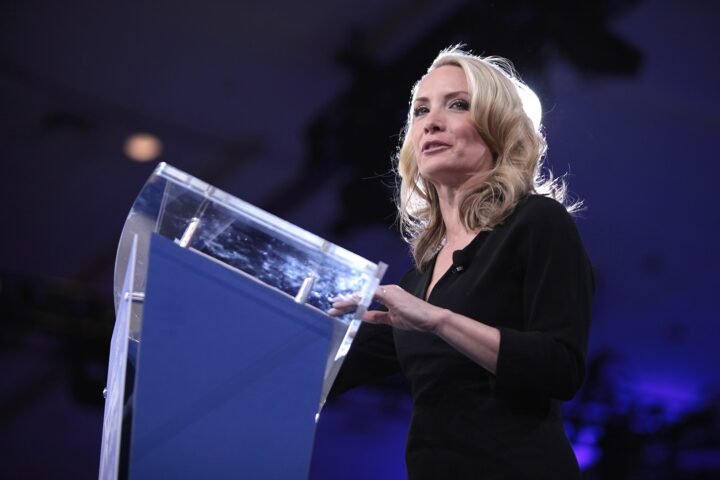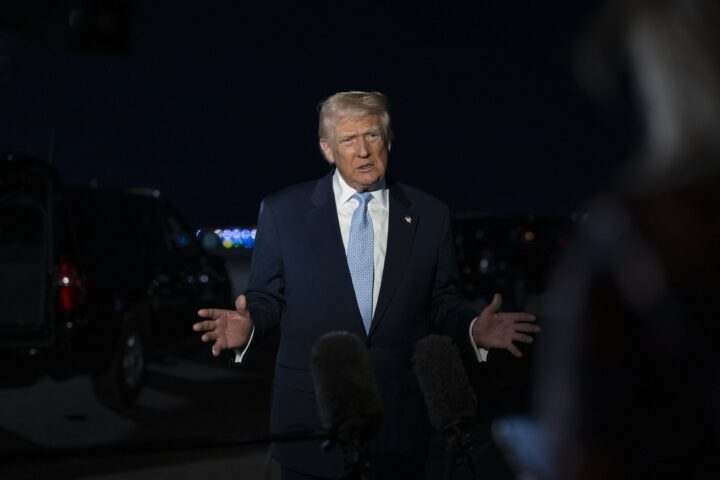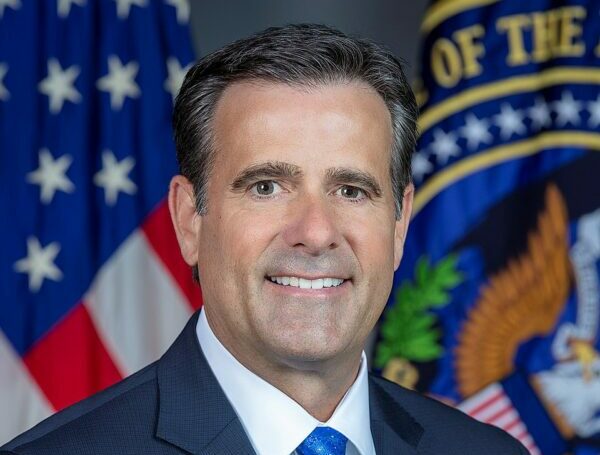
CIA Director John Ratcliffe traveled to Caracas on Thursday for a high-level meeting with Venezuela’s interim president, Delcy Rodríguez, marking the most senior visit by a Trump administration official since U.S. Special Forces captured Nicolás Maduro. The meeting took place the same day President Donald Trump welcomed Venezuelan opposition leader María Corina Machado to the White House, underscoring a two-track approach to Caracas centered on pressure, leverage, and American interests.
Ratcliffe made the trip at Trump’s direction to deliver a clear message that the United States is prepared for an improved working relationship, according to a U.S. official who spoke to NewsNation, a sister network of The Hill. The CIA director was accompanied by a small team of agency officers and spent roughly two hours in talks with Rodríguez, focusing on security and economic issues central to Washington’s priorities.
During the meeting, Ratcliffe discussed potential opportunities for economic collaboration while stressing that Venezuela can no longer function as a safe haven for America’s adversaries, particularly narcotraffickers. A source told NewsNation that Ratcliffe made clear the United States expects concrete action to end any support or protection for criminal organizations involved in the drug trade.
Among those groups is Tren de Aragua, which the U.S. government has designated a foreign terrorist organization. Ratcliffe reportedly emphasized that backing or tolerating such groups is incompatible with any improved relationship with Washington. The message was delivered directly to Rodríguez, who has also spoken with Trump by phone, signaling that the administration’s expectations are being communicated at the highest levels.
The diplomatic engagement in Caracas unfolded as Trump met with Machado in Washington. Machado said Thursday that she presented the president with her 2025 Nobel Peace Prize during their meeting, framing the exchange as a symbolic gesture. Trump later confirmed the moment on Truth Social, writing that Machado had presented him with her Nobel Peace Prize for the work he has done and calling it a gesture of mutual respect.
Despite the meeting, Trump has been candid about his skepticism regarding Machado’s domestic support inside Venezuela. He told reporters last week that he does not believe she currently has sufficient backing within the country to lead. In contrast, the administration has, for now, thrown its support behind Rodríguez as a governing partner, reflecting a pragmatic posture as Washington seeks to shape events on the ground.
Trump has also made clear his broader vision for Venezuela’s future. He has contended that after Maduro’s removal, the United States will effectively “run” the country and its oil reserves, a statement that underscores the administration’s view of Venezuela as both a strategic and economic priority.
Ratcliffe’s visit, paired with Trump’s White House meeting, highlights the administration’s assertive approach to Latin America. By combining direct engagement with firm demands on security and narcotics, the White House is signaling that cooperation comes with conditions. At the same time, the administration is keeping its options open, engaging opposition figures while dealing directly with interim authorities to ensure U.S. interests are protected.
The coordinated moves suggest the Trump administration is intent on reshaping the relationship with Venezuela, leveraging diplomatic, intelligence, and economic tools to eliminate threats, curb criminal networks, and position the United States to play a decisive role in the country’s post-Maduro future.