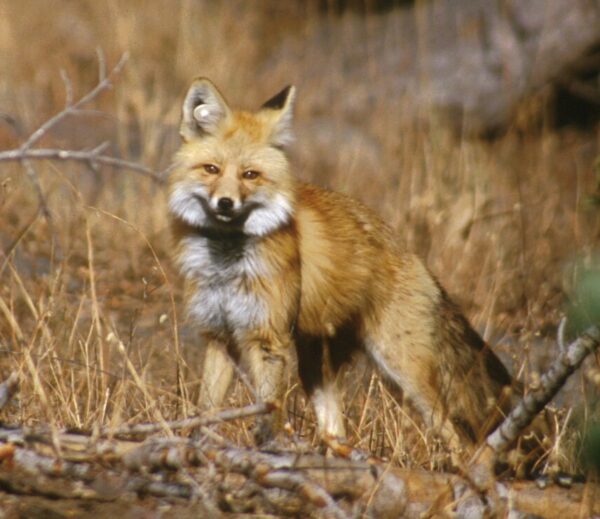
For the first time in years, wildlife researchers in California have successfully captured and collared one of the state’s rarest and most elusive mammals: the Sierra Nevada red fox. The achievement marks a significant milestone for conservationists working to better understand and protect a species that has long evaded even the most dedicated experts.
Fewer than 50 of these foxes are believed to remain in the rugged high elevations of the Sierra Nevada. Sightings are extraordinarily rare, limited to those fortunate enough to catch a glimpse near Sonora Pass or in the remote reaches of Yosemite National Park. Even among seasoned wildlife observers, spotting one is considered a once-in-a-lifetime event.
The foxes are officially listed as a threatened species in California. According to the California Department of Fish and Wildlife, the Sierra Nevada red fox represents a distinct lineage, separate from the more common red fox populations found throughout North America and Europe. That distinction underscores just how unique — and vulnerable — this alpine predator truly is.
“According to historical accounts, these alpine red foxes have always been exceedingly rare and elusive,” the department noted, highlighting that their scarcity is not a recent development but part of a long-standing pattern.
The latest breakthrough came in January, near Mammoth Lakes, a mountain community south of Yosemite. After a decade of painstaking work — including remote camera monitoring and careful analysis of scat — researchers were finally able to locate, safely capture, and fit a fox with a GPS collar before releasing it back into the wild.
CDFW described the moment as “a rare and exciting milestone” for its biologists. Encounters of this nature are extraordinarily uncommon, and officials emphasized that the data gathered will provide invaluable insight into conservation efforts moving forward.
This is not the first time collars have been deployed in the effort to study these foxes. In 2018, researchers successfully collared several individuals near Lassen Peak in far northern California. The GPS technology offers real-time information about the foxes’ movements, habitat use, migration patterns, and survival rates — critical details for managing and protecting such a fragile population.
Scientists say the new data will offer a rare opportunity to better understand the ecology and conservation needs of this remote and dwindling group. The information could prove essential in ensuring that the Sierra Nevada red fox does not slip further toward extinction.
Perhaps most striking is the fact that as recently as 15 years ago, this unique population was thought to have disappeared entirely. Today’s successful collaring effort stands as a powerful reminder that even in an era of environmental challenges, careful research and persistence can yield meaningful results.
For a species that has long existed on the brink — and largely out of sight — this milestone represents more than just a scientific achievement. It is a hopeful sign that with focused conservation work, California’s rare alpine fox may yet endure.