Roughly ten days after President Donald Trump ordered U.S. strikes against Iran, questions are growing about how long the conflict could last and what steps the United States may ultimately take if the fighting continues. Among the possibilities that has drawn attention is the prospect of a military draft, something administration officials say remains “on the table.”
The ongoing campaign has already come with a cost. Six U.S. soldiers have been killed during the conflict, which the Trump administration has defended as a necessary response to what officials describe as an imminent threat from Iran to the United States, Israel, and other nations in the Middle East.
While the administration has framed the operation as a critical step to counter Iranian aggression, uncertainty about the war’s timeline continues to raise concerns among Americans watching events unfold.
President Trump has suggested the operation could last “four to five weeks,” though Defense Secretary Pete Hegseth has avoided offering a firm timeline. Officials say limiting public discussion of strategy is essential during wartime.
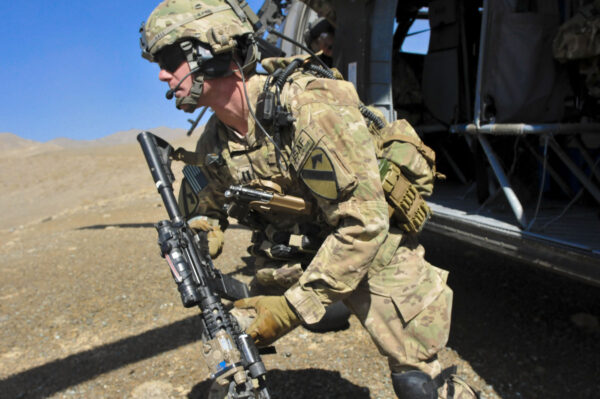
The uncertainty has led many to ask whether the United States could eventually send ground troops into Iran. Historically, air campaigns alone have not always proven sufficient to achieve long-term military objectives, fueling speculation about what might come next if the conflict drags on.
During an interview Sunday on Fox Business’ Sunday Morning Futures, host Maria Bartiromo asked White House press secretary Karoline Leavitt about concerns many American families have begun to voice.
“Mothers out there are worried that we’re going to have a draft, that they’re going to see their sons and daughters get involved in this,” Bartiromo said while asking about the president’s plans if the war escalates beyond airstrikes.
Leavitt responded by emphasizing that the administration intends to continue relying primarily on the air campaign while keeping its options open.
“It has been, and it will continue to be,” she said of the airstrikes. “President Trump wisely does not remove options off of the table. I know a lot of politicians like to do that quickly, but the president as commander in chief wants to continue to assess the success of this military operation.”
Leavitt also pointed to Iran’s history of hostility toward the United States, saying the country has threatened America for decades and has been responsible for the deaths and injuries of U.S. troops.
“They have killed and maimed thousands of American soldiers,” she said. “And President Trump was not going to allow Iran to attack our bases and our troops and our men and women in the Middle East first.”
The strikes themselves have been carried out as part of what the administration calls Operation Epic Fury.
Questions about the possibility of deeper U.S. involvement resurfaced hours later during an appearance by Hegseth on CBS News’ 60 Minutes. When asked whether the United States has any forces inside Iran, overtly or covertly, the defense secretary said the U.S. currently does not.
Still, he made clear that operational details would not be publicly discussed.
“We reserve the right,” Hegseth said, adding that the administration would not reveal its limits or plans to either the press or America’s adversaries.
Hegseth also reiterated that a primary goal of Operation Epic Fury is to eliminate Iran’s nuclear ambitions. Beyond that objective, however, officials have released few details about how the campaign will ultimately unfold.
The possibility of a military draft remains a sensitive subject in American history. Conscription played a major role in the nation’s wars during the 20th century, including World War II, the Korean War, and the Vietnam War. Men were drafted into military service from 1940 until 1973, when the United States transitioned to an all-volunteer force near the end of the Vietnam conflict.
Earlier drafts appeared in different forms throughout American history, including during the Civil War and World War I. In the latter case, the Selective Service Act of 1917 required millions of men to register for military service.
Today, the Selective Service System still exists as part of the nation’s emergency preparedness structure. Nearly all male citizens and male immigrants in the United States between the ages of 18 and 25 are required by law to register.
Registration itself does not mean someone will be sent to war. If a draft were ever reinstated, the government would conduct a lottery based on birthdates and require individuals to undergo physical and administrative screening before being called into service.
For now, the United States remains engaged primarily in an air campaign against Iran. But as the operation continues and the timeline remains uncertain, the debate over how far the conflict could expand—and what sacrifices it might demand—has begun to weigh heavily on many Americans.
[READ MORE: Explosion Rocks U.S. Embassy Entrance in Oslo as Police Launch Investigation]