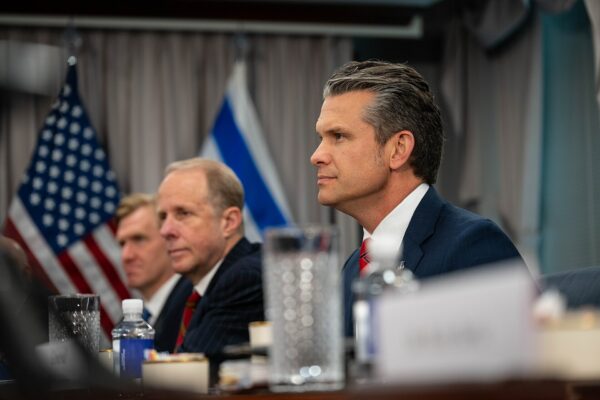
Newsmax host Greg Kelly sharply escalated his criticism of Defense Secretary Pete Hegseth on Friday, accusing the Pentagon chief of misconduct and poor leadership following the abrupt firing of Navy Secretary John Phelan.
The controversy centers on Hegseth’s decision to remove Phelan during an ongoing blockade against Iran, a move that has raised eyebrows given the timing and circumstances. Phelan, a Republican donor with no prior military experience, had served just 13 months in the role before being dismissed.
At a Thursday Oval Office press conference, President Donald Trump addressed the decision, explaining that Phelan’s firing stemmed from a “conflict” within the administration tied to issues involving the building and procurement of ships. But that explanation did little to satisfy Kelly, who took to social media with a blistering response.
Calling Hegseth a “despicable guy,” Kelly accused him of mishandling the situation and acting out of personal frustration. He suggested that the firing was not driven by urgency, arguing that Phelan could have been given additional time or a more orderly transition. Instead, Kelly described the move as abrupt and unnecessarily disruptive, claiming the Navy secretary was escorted out by security.
Kelly went further, alleging that Hegseth has a pattern of targeting individuals within the military establishment. Earlier this month, the Newsmax host referred to him as “Paranoid Pete” after the removal of Army Chief of Staff Gen. Randy George, along with two other senior officers. Kelly framed those decisions as evidence of insecurity, suggesting that experienced personnel were being sidelined for reasons unrelated to performance.
The criticism did not stop there. Kelly also took issue with Hegseth’s decision to lift suspensions imposed on two Army helicopter crews involved in a fly-by near musician Kid Rock’s Tennessee residence. In Kelly’s view, such actions undermine discipline and risk encouraging behavior that could have serious consequences in the future.
“He has no business micromanaging Army units,” Kelly argued, warning that unauthorized stunts could eventually lead to dangerous outcomes if not addressed properly. His remarks reflected a broader concern about maintaining standards within the military, particularly during periods of heightened international tension.
Kelly has also criticized Hegseth’s rhetoric surrounding the Iran conflict, urging a more measured tone. He argued that unnecessary taunting of adversaries can backfire, emphasizing that professional military leaders typically avoid inflammatory language that could escalate already volatile situations.
That critique underscores a deeper unease about how leadership decisions and public messaging intersect with ongoing military operations. In times of conflict, even small missteps—whether in personnel decisions or public statements—can carry outsized consequences.
Since his confirmation in 2025, Hegseth has dismissed 34 officials, a number that Kelly and others point to as evidence of instability within the Defense Department. While supporters may view the moves as efforts to reshape leadership, critics argue they risk disrupting continuity at a time when steady command is essential.
The clash highlights growing divisions not just between political parties, but within conservative circles themselves. As debates over leadership, accountability, and military conduct continue, the situation serves as a reminder that internal disputes can become as consequential as external challenges—especially when national security and global tensions are involved.
[READ MORE: GOP Lawmakers Push Trump to Pardon Soldier Accused in Maduro Betting Case]