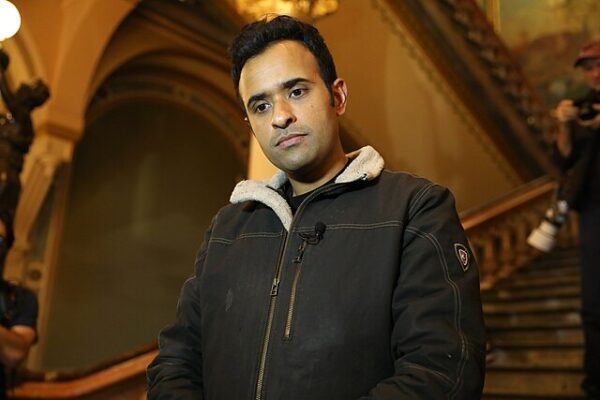
Former Defense Secretary Mark Esper said Wednesday night that Iran is likely to press for as many concessions as possible in negotiations with the United States before the upcoming midterm elections, arguing that President Donald Trump’s options could expand significantly afterward.
Speaking on NewsNation’s “The Hill,” Esper said Tehran understands that Trump’s political considerations could change once the elections are over.
“His hand will become freer after the election for sure, and the Iranians know that,” Esper said. “So this is the Iranians’ time of maximum negotiation — get what they can now, because after Nov. 4, when [Trump] … doesn’t have to worry about the politics and economics, he can really unleash the United States military once again after Iran.”
Esper’s comments came as the fragile memorandum of understanding signed in June between Washington and Tehran appears increasingly uncertain following a new round of military action between the two countries.
The agreement, intended to end the conflict, established a ceasefire and reopened the Strait of Hormuz, one of the world’s most important shipping routes. However, the document left unresolved one of the most contentious issues between the two nations: the future of Iran’s nuclear material. That issue was slated to be addressed during subsequent negotiations.
The situation deteriorated dramatically this week after the United States launched strikes against roughly 90 targets inside Iran on Wednesday evening.
Those operations followed hours-long U.S. strikes Tuesday night, which the Trump administration described as retaliation after Iran targeted three commercial vessels traveling through the Strait of Hormuz in recent days.
Iran responded by launching drones and missiles at Bahrain and Kuwait, both of which host U.S. troops and military assets.
The latest exchange of attacks has cast serious doubt on the future of the June agreement, with President Trump signaling Wednesday that he considers the deal finished.
Speaking during the NATO summit, Trump sharply criticized Iran and dismissed the prospects of further negotiations.
“I don’t want to deal with them anymore. They’re scum,” Trump said, adding that continuing discussions with Iranian negotiators was a waste of time.
Despite the escalating rhetoric and renewed military confrontation, Esper said he does not believe the agreement has completely collapsed, arguing that neither Washington nor Tehran appears eager to return to a full-scale war.
According to Esper, Trump has significant reasons to avoid a broader conflict, particularly because of the potential economic consequences.
“President Trump, of course, certainly does not want to return to all-out war because he does not want to see oil prices rise, and that means gas prices go up as well. And that’s not good for the midterm elections,” Esper said.
Esper, who served as defense secretary during Trump’s first administration, predicted the conflict is likely to continue through repeated cycles of military escalation followed by diplomatic efforts.
“It settles down, diplomacy takes back over, some ships pass through [the strait], it flares up again when they take shots at them, and we go through this cycle over and over and over again,” he said.
His assessment suggests that while both sides continue exchanging military strikes, negotiations may continue intermittently as each seeks to advance its own strategic objectives without triggering a return to sustained, all-out war.
[READ MORE: Trump Says Iran May Target Him as He Defends Administration’s Strategy at NATO Summit]