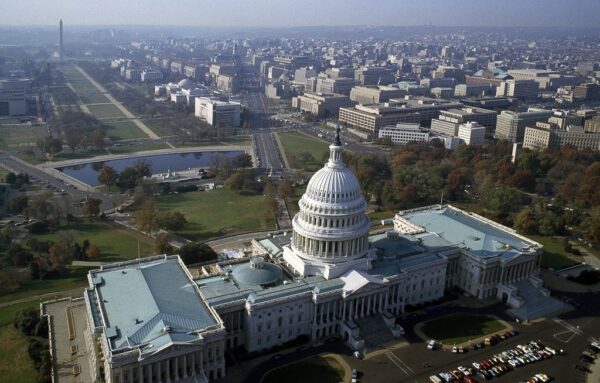
House Speaker Mike Johnson moved Wednesday to tamp down a brewing Republican revolt, pushing through a key budget resolution that sets the stage for a second reconciliation bill aimed at funding immigration enforcement, even as internal divisions threatened to derail the effort.
The narrow 215-211-1 vote, which fell along party lines with Rep. Kevin Kiley voting present, marks a critical step toward ending the Department of Homeland Security shutdown that has now stretched into a record 10 weeks. The reconciliation bill is part of a broader two-step plan to reopen DHS, as pressure mounts from both the White House and the Senate to pass a bipartisan funding measure to keep the rest of the department running.
But the path forward was anything but smooth. For the second time in a single day, House leadership was forced to hold a vote open for hours while scrambling to win over frustrated conservatives. At the center of the dispute was what many lawmakers saw as a reversal on the farm bill and a controversial proposal tied to it that would allow year-round sales of E15 ethanol fuel.
Tempers flared behind closed doors, with raised voices reportedly echoing beyond the meeting room. Ultimately, a deal emerged: the E15 provision would be separated from the farm bill and receive its own up-or-down vote, according to Rep. Derrick Van Orden. That compromise helped ease tensions enough to move the broader budget measure forward.
Earlier in the day, Johnson and his leadership team had already managed to convince more than a dozen holdouts to support a procedural rule advancing the budget resolution and reauthorization of warrantless surveillance powers. But in doing so, they appeared to sideline a scheduled farm bill vote—triggering backlash when it later reappeared on the legislative calendar.
The divide within the GOP reflects competing regional and policy priorities. Lawmakers from agricultural states have long supported the ethanol measure, while those from fossil fuel-producing regions remain skeptical. Others, including Rep. Lauren Boebert, pushed for amendments tailored to their own states, further complicating negotiations.
Frustration boiled over on the House floor, where Rep. Chip Roy was seen expressing anger toward leadership before briefly leaving the Capitol. He later returned to cast a decisive “yes” vote as leadership continued one-on-one discussions with members for hours.
Even with the resolution adopted, the road ahead remains uncertain. Johnson is working with a razor-thin majority and can afford to lose only two Republican votes on future legislation if Democrats remain unified in opposition. Lawmakers such as Rep. Thomas Massie and Rep. Brian Fitzpatrick have previously opposed similar reconciliation efforts, underscoring the challenge ahead.
Some conservatives have also voiced concern about keeping the upcoming reconciliation bill narrowly focused, a strategy backed by Senate Majority Leader John Thune. Members of the House Freedom Caucus have instead argued for a broader package that would address defense spending and healthcare reforms alongside DHS funding.
Meanwhile, time is running short. DHS Secretary Markwayne Mullin has warned that funds to pay employees could run out by early May, placing additional urgency on lawmakers. President Donald Trump has said he wants the final bill on his desk by June 1.
The standoff highlights not only the difficulty of governing with slim margins, but also the broader tension between advancing policy priorities and ensuring the continuity of critical government functions. As lawmakers push forward, the balancing act between fiscal strategy, political unity, and national security remains as delicate as ever.
[READ MORE: Fetterman Pushes Back on Party Criticism as Fox News Host Floats GOP Switch]