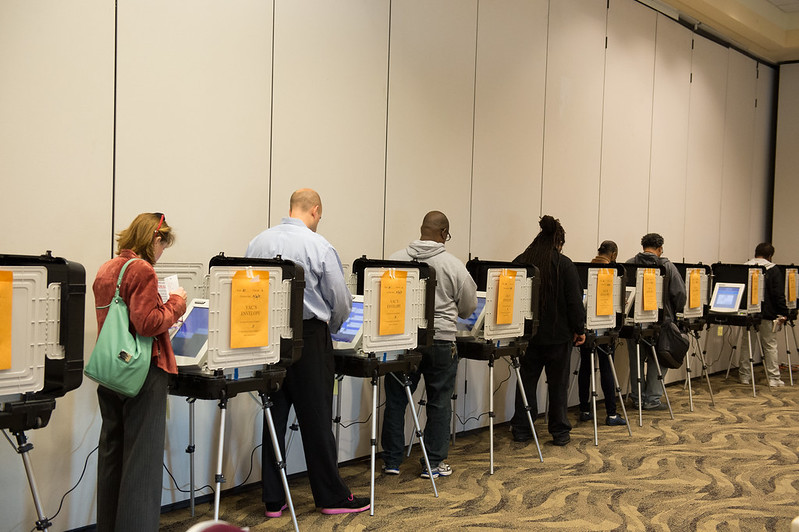
House Republicans on Wednesday rolled out a budget framework for a roughly $95 billion reconciliation package aimed at advancing several key GOP priorities, including defense spending, farm assistance and funding to help states implement voter ID requirements for elections.
The proposal marks the beginning of what Republican leaders hope will be their final use of the budget reconciliation process while maintaining control of the House, Senate and White House. Because reconciliation legislation can clear the Senate with a simple majority, Republicans would be able to bypass a Democratic filibuster as they seek to move their agenda forward.
The budget resolution itself does not contain the full legislative text but instead establishes the framework and spending instructions for a more detailed reconciliation package that lawmakers will craft in the coming weeks.
The House Budget Committee is expected to begin consideration of the resolution on Thursday, officially launching the next phase of the reconciliation effort as Republicans look toward the high-stakes 2026 midterm elections.
House Budget Committee Chairman Jodey Arrington, R-Texas, said Republicans were elected with a mandate to reverse Democratic policies and pursue conservative priorities.
“Republicans were sent to Washington on a mission to reverse the failed policies of the socialist Democrats and restore the greatness of America,” Arrington said in a statement.
He added that House Republicans intend to use the reconciliation process to overcome Democratic opposition while providing support for the military and strengthening election security measures.
“On Thursday, House Republicans will unlock a third budget reconciliation to stop Democrat obstruction, support our troops, and safeguard the integrity of our elections. We will use every tool and resource at our disposal to govern our great nation and deliver on behalf of the freedom-loving people who gave us unified Republican leadership,” Arrington said.
Under the spending instructions outlined in the resolution, the House Armed Services Committee would receive $60 billion, while the House Permanent Select Committee on Intelligence would receive an additional $15 billion.
The defense funding is expected to improve military readiness, strengthen the nation’s defense industrial base and replenish U.S. weapons stockpiles as the military conflict with Iran continues.
Speaker Mike Johnson, R-La., and other House Republicans were briefed Tuesday evening by Defense Secretary Pete Hegseth on the defense-related portions of the package ahead of its formal release.
Despite support from Republican leadership, the proposal is already facing questions from fiscal conservatives because it does not include spending offsets. Several lawmakers who have consistently argued that new federal spending should be accompanied by reductions elsewhere have voiced concerns about moving forward without corresponding cuts.
Rep. Warren Davidson, R-Ohio, predicted on X that the budget resolution would be “DOA,” or dead on arrival, signaling the challenges Johnson could encounter from members of his own conference.
In a separate post, Davidson criticized the proposal, writing, “There is no will to spend less or honestly pay for massive spending. Deficits, Debt, and Debasement all the way to the crash site. Nothing stops this train. Make a plan.”
Rep. Chip Roy, R-Texas, a member of the House Budget Committee and policy chair of the House Freedom Caucus, also acknowledged the ongoing debate between increasing defense funding and maintaining fiscal discipline.
Speaking with reporters before the resolution was released, Roy said lawmakers like himself prefer that all new spending be fully paid for, but suggested there could be room for agreement if the defense funding remains targeted while also advancing the SAVE America legislation through the reconciliation process.
[READ MORE: Trump Says Lincoln Memorial Reflecting Pool Will Reopen ‘Soon’ After Repairs]