Senate Judiciary Committee Chairman Chuck Grassley, R-Iowa, is intensifying scrutiny over the failed “Arctic Frost” election case tied to former special counsel Jack Smith, releasing a new tranche of documents that he says shed light on how the investigation was conducted—and who may have been targeted along the way.
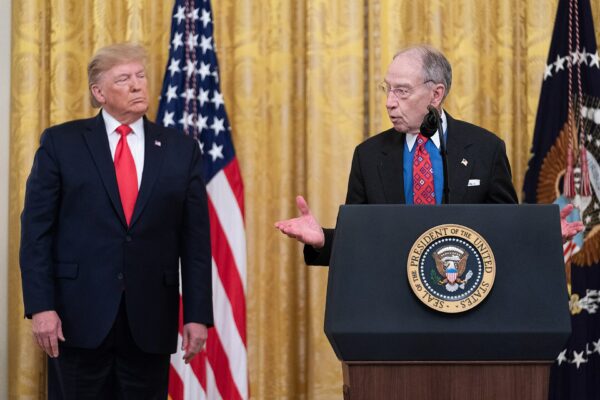
Speaking at a Judiciary Subcommittee hearing, Grassley outlined findings from what he described as a long-running inquiry that began in July 2022 following what he called credible whistleblower disclosures. The hearing marks the second in a series he has authorized, signaling that the investigation is far from over.
At the center of the controversy are newly released records from the Department of Justice and Verizon, including subpoenas issued by Smith’s team for the phone records of now-FBI Director Kash Patel. Grassley, joined by Sens. Ron Johnson of Wisconsin and Ted Cruz of Texas, emphasized that the effort is aimed at increasing transparency and ensuring the public understands how taxpayer-funded investigations are carried out.
“Our goal is to publicly release as many records as possible,” Grassley said, arguing that Americans deserve clarity on how decisions were made and who was involved.
Among the most striking revelations is what Grassley described as a “wish list” compiled by Smith’s team, naming 14 members of Congress whose phone tolling data they sought to obtain. According to the records, investigators were already aware that some of these lawmakers had communicated with individuals associated with President Donald Trump.
Internal communications cited by Grassley suggest that Smith was aware of the effort. One email referenced in the release indicates that before informing senior Justice Department officials, the team intended to “fire off subpoenas” for congressional phone data, adding that it would be prudent to ensure Smith was aware of the move.
The records also acknowledge potential legal obstacles. One document notes it was “unlikely” that many of the targeted lawmakers would cooperate and that they “likely have a valid Speech or Debate privilege” protecting them from compelled testimony. Grassley pointed out that previous disclosures had already shown Smith’s team was warned that such subpoenas could raise constitutional concerns.
Despite those warnings, Grassley said, the team moved forward in seeking and obtaining congressional data—though he noted that in at least one instance, Smith backed down after a phone company resisted. That decision, Grassley argued, raises further questions about whether the data was truly necessary.
Additional documents challenge Smith’s prior claims about the role of the House January 6th Committee’s materials in his investigation. While Smith had asserted those materials were only a small part of the overall effort, records released by Grassley suggest otherwise. One document states that the leadership team “fully read and reviewed” the January 6 report and incorporated it into their investigative plan, even working through it “page by page.”
The same materials indicate that Smith’s team intended to log all information from the report and “leverage” it to streamline interviews, focusing only on what they considered underdeveloped areas.
Taken together, Grassley argued, the records raise serious questions about Smith’s conduct, his representations to the court and the public, and the broader handling of the investigation.
Democrats have criticized the committee for not calling Smith to testify earlier. But Grassley pushed back, saying that a premature hearing would have limited the committee’s ability to uncover key details. Now, he contends, the growing body of evidence suggests that Smith may have misled Congress and the public.
As Washington continues to grapple with internal divisions and high-stakes investigations—often unfolding alongside costly international conflicts—the latest revelations serve as a reminder that government accountability at home can be just as consequential as actions abroad.
Grassley made clear that the committee’s work is ongoing, signaling that more disclosures could be on the horizon.