Two influential Republican senators signaled Tuesday that Congress is unlikely to approve a third budget reconciliation package, raising concerns about relying on such legislation to fund key defense priorities and warning that doing so could create uncertainty for military planning.
The comments came during a Senate hearing focused on the Air Force’s budget request for the upcoming fiscal year, where lawmakers questioned administration officials about how certain defense programs would be financed.
Senate Appropriations Committee Chair Susan Collins of Maine expressed particular concern about funding assumptions built into the administration’s proposal. During an exchange with Air Force Secretary Troy E. Meink, Collins pointed to what she viewed as a relatively low funding request for several programs and suggested the administration intended to make up the difference through a future reconciliation package.
Budget reconciliation is a special congressional procedure that allows legislation to pass the Senate with a simple majority vote, bypassing the chamber’s traditional 60-vote filibuster threshold. While the process can be a powerful tool for advancing major policy priorities, it is often politically difficult and time-consuming to complete.
Collins cautioned that counting on a future reconciliation bill to provide a substantial portion of defense funding carries significant risks.
“I would just suggest that it is taking a terrible risk and creates instability when you’re counting on a third reconciliation bill for the bulk of the money rather than doing base funding through the defense appropriations bill,” Collins said during the hearing.
Her remarks reflected a broader concern among appropriators that core government functions, particularly those related to national defense, should be funded through the regular appropriations process rather than through uncertain future legislative efforts.
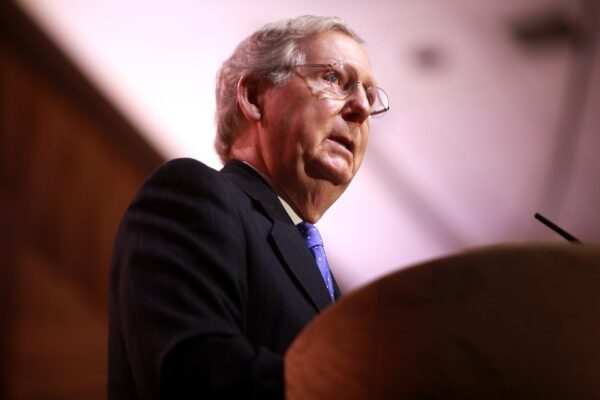
Senate Appropriations Defense Subcommittee Chairman Mitch McConnell of Kentucky echoed Collins’ skepticism and appeared even more definitive in his assessment of the political landscape.
McConnell, who is set to retire at the end of the year after decades as one of the Republican Party’s most influential figures, told the hearing that lawmakers should not assume another reconciliation package will become law.
“I think it’s safe to conclude there will not be another reconciliation bill, so it’s really not an option,” McConnell said.
Collins immediately agreed with that conclusion, signaling a rare point of complete alignment between two of the Senate’s most senior Republican appropriators.
The comments come after Senate Republicans successfully advanced two reconciliation measures since taking control of the majority. The most recent was a narrower package designed to provide funding for Immigration and Customs Enforcement and the U.S. Border Patrol.
Despite those successes, some Republicans have continued discussing the possibility of a third reconciliation effort. Supporters have suggested such a package could focus on lowering costs for Americans, reducing fraud in social programs, and advancing additional priorities supported by the White House.
At the same time, the administration has formally requested that approximately $350 million—roughly one-quarter of its overall spending request—be achieved through reconciliation legislation.
Lawmakers have also been waiting for a supplemental funding request tied to the ongoing military conflict involving Iran. Appropriators had expected the administration to submit such a request, but it has not yet arrived.
The discussion highlighted a continuing debate over how Congress should fund government priorities. Collins, in particular, has long questioned the growing reliance on reconciliation, favoring the traditional appropriations process that requires bipartisan cooperation and provides a more predictable path for funding decisions.
As budget negotiations continue, Tuesday’s hearing underscored a message from senior Republican lawmakers: major defense programs should not depend on legislation that may never materialize, particularly at a time when questions surrounding military commitments and future spending remain unresolved.
[READ MORE: Former Platner Aide Issues Scathing Rebuke Ahead of Maine Democratic Primary]