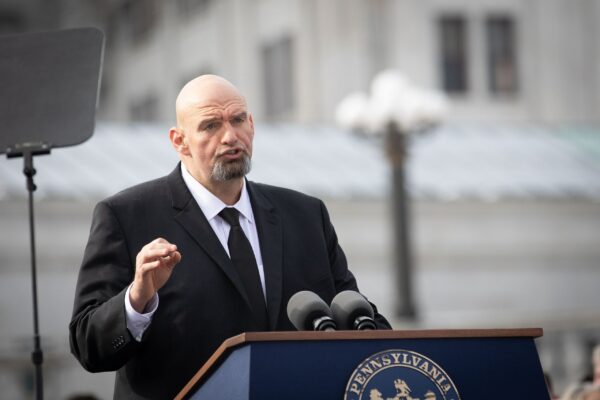
Sen. John Fetterman (D-Pa.) argued Tuesday night that hostility toward Israel is inseparable from hostility toward the United States, delivering some of his strongest comments yet in defense of America’s closest Middle East ally.
Fetterman has become one of Israel’s most outspoken supporters within the Democratic Party, a position that has increasingly placed him at odds with many activists, commentators, and elected officials who have criticized the Israeli government and its conduct in the wars in Gaza and Lebanon. The Pennsylvania senator made his latest remarks during an appearance on Fox News’s Hannity, where he has become a frequent guest and often offers criticism of fellow Democrats.
During the interview, host Sean Hannity pointed to the growing influence of democratic socialists within the Democratic Party and specifically referenced New York City Mayor Zohran Mamdani. Hannity suggested that some figures on the left harbor deep hostility toward Israel and asked Fetterman why he believed that sentiment existed.
Fetterman responded by arguing that opposition to Israel reflects a broader rejection of the United States and Western values.
“Because you have such contempt for Israel, I mean, of course, you’re also anti-American, and you’re anti-Western civilization,” Fetterman said. “And you’re anti-capitalism and the American way of life.”
The senator went on to criticize ideological trends he sees within parts of the political left, saying, “Now, I mean, they’re all socialists, of course. Now there’s communists and now Marxists and now they’re proud of this.”
The comments represent another example of Fetterman’s increasingly public break with factions of his own party that have become more critical of Israel. While many Democrats have voiced concerns about the conflicts in Gaza and Lebanon and the broader direction of U.S. policy in the region, Fetterman has consistently positioned himself as one of Israel’s most reliable defenders in Congress.
That stance has come with political consequences.
According to data highlighted by CNN analyst Harry Enten in March, Fetterman’s standing among Democratic voters in Pennsylvania has deteriorated sharply since he took office. Enten noted that the senator’s approval rating among Democrats had experienced a dramatic swing, moving from 68 points above water to 40 points underwater, a shift totaling 108 points.
The decline underscores the tensions between Fetterman and parts of the Democratic base that initially embraced him during his successful 2022 Senate campaign. At the time, he enjoyed strong support from the party’s progressive wing. Since entering office, however, his positions on a number of issues—particularly his unwavering support for Israel—have generated friction with many of those same voters.
Fetterman’s political standing also came under scrutiny last month following a report published by New York magazine. According to the report, the senator discussed the possibility of serving as the Democratic vice presidential nominee in 2028 during a staff meeting last summer.
The idea reportedly stunned some staff members.
“Almost all of us had our jaws on the floor,” one person who was reportedly in the room told the publication. The individual further claimed that several aides questioned the suggestion given Fetterman’s standing within the party.
The senator has not been shy about taking positions that differ from prevailing views within Democratic circles, particularly when it comes to foreign policy and support for Israel. His latest comments on Hannity are likely to deepen that divide.
As debates continue over America’s role overseas and the conflicts that have dominated headlines, Fetterman’s remarks highlight the growing ideological battle inside the Democratic Party over foreign policy, alliances, and how closely support for longtime allies should be tied to broader questions about American identity and national interests.
[READ MORE: Trump Lays Into Senate Over Iran Vote]