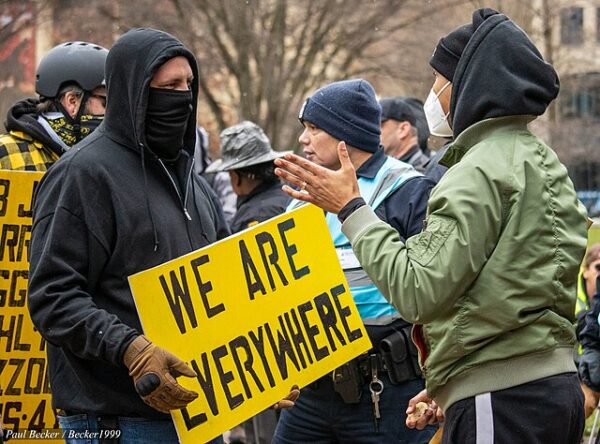
An FBI official reportedly struggled Thursday to answer even the most basic questions about antifa’s structure after President Donald Trump designated the movement a domestic terrorist organization — a moment that Democrats quickly seized on to claim the bureau had failed to justify the label. But the exchange also underscored what Republicans have been warning about for years: the threat posed by antifa’s violent, decentralized network is real, even if its organizational structure is opaque.
Antifa, short for “anti-fascist,” has long been described by left-leaning academics as merely an “ideology.” Critics have used that framing to argue that Trump applied the terrorist designation to target protesters rather than violent actors. But from the FBI’s vantage point, antifa-aligned extremists continue to rank among the most dangerous domestic threats.
Michael Glasheen, a veteran FBI agent and operations director of the bureau’s National Security Branch, made that clear while testifying before the House Homeland Security Committee during a hearing on “Worldwide Threats to the Homeland.”
“We share the same view,” Glasheen said when asked whether he agreed with Trump’s designation. “When you look at the data right now, you look at the domestic terrorist threat that we’re facing… that’s the most immediate violent threat that we’re facing on the domestic side.”
But when Rep. Bennie Thompson of Mississippi — the committee’s top Democrat — pressed Glasheen for specifics about antifa’s organization, the exchange quickly grew heated.
Thompson asked where antifa was headquartered. When Glasheen hesitated, Thompson followed up: “Where in the United States does antifa exist?”
Glasheen replied that the FBI was “building out the infrastructure right now.”
Thompson shot back, “What does that mean? You said antifa is a terrorist organization. Tell us… how did you come to that? Do they exist? How many members do they have in the United States as of right now?”
Glasheen responded that the situation is “very fluid.”
Thompson continued pressing: “If you said antifa is the No. 1 domestic terrorist organization… I just need to know where they are. How many people have you identified… that antifa is made of?”
Glasheen maintained that “investigations are active,” but declined to provide numbers.
Thompson then accused the FBI of failing to substantiate its position: “Sir, you wouldn’t come to this committee and say something you can’t prove… but you did.”
The Trump administration has taken additional steps since labeling antifa a terrorist organization. A memo from Attorney General Pam Bondi outlined potential statutes that could be applied to domestic terrorism and political violence — and cited antifa specifically, noting its opposition to issues favored by the administration.
While Democrats used Glasheen’s uncertainty to argue that antifa does not merit a terrorism label, Republicans have emphasized that the group’s intentionally amorphous structure is part of the threat. Decentralized extremist networks, they argue, are harder to monitor and disrupt — but no less dangerous.
The hearing made one thing clear: antifa’s violence is real, ongoing, and enough of a concern for federal authorities that they continue treating it as a top domestic threat, even if Democrats wish to downplay or redefine what the movement represents.
[READ MORE: Poll Shows Ohio Governor’s Race Deadlocked as Acton Gains Ground and Ramaswamy Faces New Headwinds]