Cuban President Manuel Díaz-Canel confirmed Friday that his government is engaged in talks with the Trump administration aimed at resolving long-standing disputes between the two countries and exploring potential areas of cooperation.
Speaking publicly about the discussions, Díaz-Canel said the dialogue is intended to address what he described as “bilateral differences” while determining whether both governments are willing to take concrete steps toward cooperation. The confirmation marks a rare moment of diplomatic engagement between two nations that have spent decades locked in hostility and ideological rivalry.
President Donald Trump has assigned Secretary of State Marco Rubio to lead the American side of the discussions. Trump has previously suggested that Cuba’s 67-year communist system could collapse under pressure from the United States, a prediction that has added tension to the already fragile relationship between Washington and Havana.
The current round of talks comes after a dramatic series of events in the region earlier this year. In January, the Trump administration imposed a U.S. quarantine on fuel imports to Cuba, effectively cutting off energy deliveries from Venezuela. The move followed a surprise military operation that removed Venezuelan President Nicolás Maduro from power and brought him to the United States to face drug charges.
Without Venezuelan fuel shipments, Cuba has faced mounting pressure, making diplomatic engagement with Washington increasingly significant.
“There are international factors that have facilitated these exchanges,” Díaz-Canel said in remarks cited by Cuba’s foreign minister, Bruno Rodríguez Parrilla.
According to the Cuban leader, the purpose of the talks is to “identify bilateral issues that require solutions” and to determine whether both sides are willing to move forward on concrete steps that could reduce tensions. He added that negotiators are also seeking areas where the two countries might cooperate, particularly on issues that affect the security of both nations.
Díaz-Canel emphasized that the process is delicate.
“These talks are a very sensitive process that is conducted with seriousness and responsibility,” he said.
The discussions come as the Trump administration has taken an aggressive approach to foreign policy across several regions. In addition to the operation that removed Maduro, the administration has ordered a months-long military campaign targeting suspected drug-trafficking vessels in the Caribbean.
At the same time, the United States launched a war against Iran in coordination with Israel on Feb. 28, further widening the scope of American military involvement overseas.
The administration has also carried out coordinated operations with Ecuador’s military, conducted strikes against terrorist groups in Nigeria, and launched earlier rounds of attacks against Iranian targets alongside Israel. In March 2025, the United States carried out a two-month military campaign against Houthi forces in Yemen.
Against that backdrop, the talks with Cuba stand out as a diplomatic channel opening amid a period defined largely by military action.
Trump has previously suggested the United States could pursue what he called either a “friendly” or “not friendly takeover” of Cuba, remarks that underscored the administration’s willingness to apply pressure on the island’s government.
Reports have also suggested that the administration is exploring an economic arrangement with Cuba that could be announced soon. One potential element could involve easing restrictions on Americans traveling to Havana, though such a change would require approval from Congress.
Other discussions reportedly include possible sanctions relief and economic agreements related to ports, energy, and tourism.
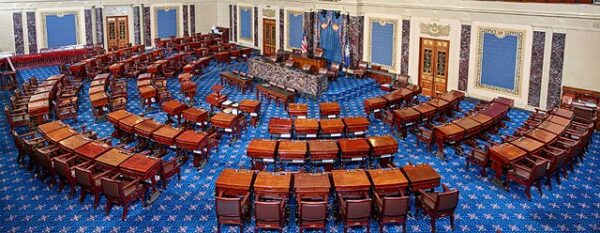
Meanwhile, Senate Democrats have introduced legislation that would prevent the president from using military force in Cuba without congressional approval. The measure is intended to force debate in Washington over the administration’s expanding use of military power abroad.
Whether the talks lead to meaningful change remains uncertain. But after decades of confrontation between the two countries, even limited dialogue suggests that diplomacy still has a place alongside pressure — particularly at a time when the United States finds itself involved in conflicts across several regions of the world.