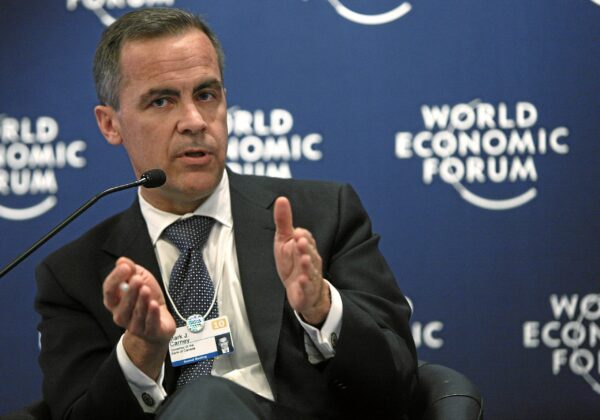
Canadian Prime Minister Mark Carney struck a defiant tone Thursday, insisting that Canada’s future is its own to decide after President Donald Trump remarked that the country “lives because of the United States,” underscoring growing tensions between the two leaders following their exchanges at the World Economic Forum.
In a post on the social media platform X, Carney praised the long-standing relationship between Canada and the United States but rejected Trump’s characterization of Canada’s dependence. He said the two nations have built a strong partnership across economic ties, security cooperation, and cultural exchange, but argued that Canada’s success is rooted in its own identity and choices.
“Canada doesn’t ‘live because of the United States,’” Carney wrote. “Canada thrives because we are Canadian.”
Carney made the comments after returning from Davos, Switzerland, where he delivered a widely discussed speech positioning Canada as a leading “middle power” in a changing global order. In that address, Carney argued that countries like Canada must act together on the world stage, warning that nations not involved in shaping decisions risk being marginalized. The speech drew a standing ovation from the audience and highlighted what Carney described as fractures in the post–World War II international system, an apparent reference to shifts associated with President Trump, though he did not mention Trump by name.
Trump responded sharply to Carney’s Davos remarks on Wednesday while speaking to attendees at the forum. The president said Canada should be grateful to the United States, particularly for the security umbrella Washington provides.
“I watched your prime minister yesterday, he wasn’t so grateful,” Trump said. “But they should be grateful to us, Canada. Canada lives because of the United States.” Trump then directly addressed Carney, urging him to remember that reality before making further statements.
Carney’s comments on Thursday appeared to serve as a rebuttal to those remarks. He emphasized Canadian sovereignty and self-determination, saying that Canadians are in control of their own future.
“We are masters in our home,” Carney said. “This is our own country, it’s our future, the choice is up to us.”
The disagreement escalated further on Friday when Trump withdrew Carney’s invitation to join the newly formed Board of Peace, an international body intended to oversee the rehabilitation of the Gaza Strip. The board is part of Trump’s 20-point peace plan following a ceasefire agreement between Israel and Hamas that ended a two-year conflict in Gaza.
In a post on Truth Social, Trump formally rescinded the invitation, addressing Carney directly and announcing that Canada would no longer be included in what he described as the most prestigious leadership board ever assembled.
According to Reuters, Carney had received the invitation to join the Board of Peace last week. He publicly raised questions about the board’s proposed $1 billion membership fee, telling reporters that Canada prefers to allocate resources where they can have the greatest impact.
Carney said that large-scale, unimpeded humanitarian aid to Gaza remains a prerequisite for any meaningful progress. He noted that aid flows have not yet reached the necessary scale and suggested that addressing that issue must come before moving forward with broader initiatives.
The exchange highlights a widening divide between Trump and Carney, as disagreements over gratitude, sovereignty, and global leadership spill from Davos into broader diplomatic relations between Washington and Ottawa.