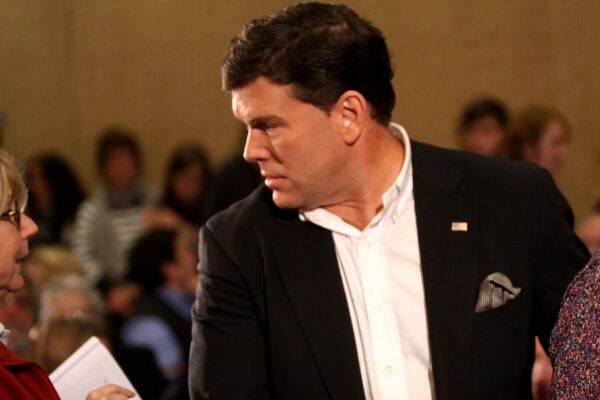
Fox News anchor Bret Baier voiced a series of concerns Friday about President Donald Trump’s 14-point agreement with Iran, arguing that decades of negotiations with Tehran have left many Americans skeptical while also suggesting the administration deserves an opportunity to see whether the current diplomatic effort succeeds.
Baier discussed the agreement during an appearance on “The PBD Podcast” with host Patrick Bet-David. The conversation covered Baier’s career in journalism, his interviews with presidents, and his role moderating political debates before turning to the Trump administration’s memorandum of understanding with Iran.
The agreement, which establishes a 60-day ceasefire and framework for broader negotiations, has generated criticism from both Republicans and Democrats. Some supporters of the president have also expressed concern over provisions that could result in sanctions relief, the creation of a $300 billion reconstruction investment fund, and other benefits for Iran as talks continue.
The diplomatic process hit an early complication when Vice President JD Vance postponed a planned trip to Switzerland, where he was expected to formally sign the agreement. The delay came amid Israeli strikes against Iran-backed Hezbollah in Lebanon. Israel and Lebanon have since agreed to a ceasefire.
During the podcast, Baier said he found it notable that Secretary of State Marco Rubio had not publicly commented on the agreement while Vance had become the administration’s most visible defender of the deal.
“I’ve noticed his silence over the last few days, and I think it’s pretty telling that he hasn’t weighed in publicly,” Baier said, contrasting Rubio’s absence from the public debate with Vance’s extensive media appearances.
Still, Baier stopped short of condemning the agreement outright. He argued that administration officials deserve a chance to pursue negotiations while acknowledging that many critics are influenced by nearly five decades of difficult relations with Iran.
“More power to [Vance],” Baier said, adding that supporters of the agreement should be given the benefit of the doubt as negotiations proceed.
At the same time, he emphasized what he sees as the central concern facing supporters and critics alike: the long history of Iranian negotiations that many observers believe have failed to produce lasting results.
Baier also pointed to concerns about money flowing to the Iranian regime. Although the administration maintains Iran will not directly receive funds from the United States, he noted that the lifting of oil restrictions has allowed Iranian oil exports to resume, generating revenue for the government.
According to Baier, criticism of the agreement extends across party lines. He said some opponents fear the arrangement could ultimately strengthen a regime that neighboring Gulf Arab states already view with concern.
When asked whether Iran emerged with the better side of the agreement, Baier argued the answer is complicated.
He noted that Iran’s military suffered major setbacks during the conflict, saying its Navy and Air Force had been heavily damaged. Nevertheless, he cautioned that Iran still possesses a large missile arsenal and continues to project confidence despite those losses.
Baier also highlighted what he sees as major omissions from the current agreement. He noted that the deal contains no restrictions on Iran’s missile program and does not address civil rights issues inside the country.
“There’s nothing in this deal that prevents them from killing 40,000 Iranians if they go out in the streets and protest,” Baier said, referring to reports regarding the regime’s crackdown on protesters.
In the end, Baier concluded that Iran is not stronger than many critics claim, but neither has it been weakened to the degree some expected after months of conflict. As negotiations continue over the next 60 days, he suggested the ultimate success or failure of the agreement will depend on whether diplomacy can achieve results that years of confrontation and warfare have failed to secure.
[READ MORE: California Transparency Fight Erupts as Critics Warn Public Records Bill Could Expand Government Secrecy]