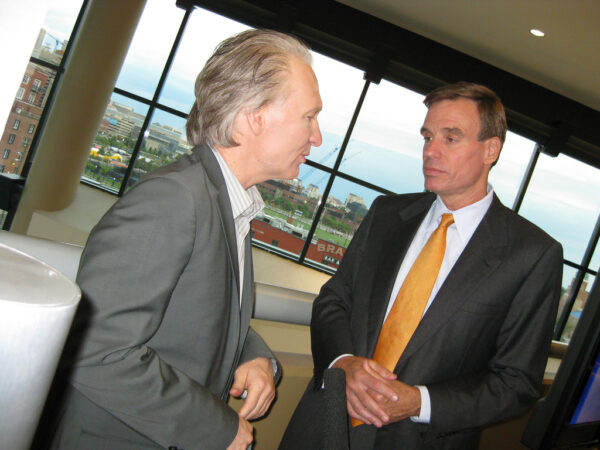
Actress Bo Derek and comedian Bill Maher shifted from a discussion about drug policy to criticism of COVID-19 vaccine mandates during a conversation on Maher’s Club Random podcast over the weekend.
Derek, who became a Hollywood sex symbol in the 1970s after starring alongside Dudley Moore in the film “10,” joined Maher for a wide-ranging interview that touched on everything from drug decriminalization to the government’s response to the COVID pandemic.
The conversation began with Derek expressing support for decriminalizing drugs.
“I want drugs to be decriminalized,” Derek said.
Maher responded humorously while holding up a blunt.
“I want it decriminalized today,” Maher quipped. “On this show, I want it to happen!”
Derek argued that history demonstrates the unintended consequences of banning substances.
“Didn’t we learn anything in the prohibition?” she asked. “Prohibition created the mafia!”
Maher quickly agreed with the comparison before discussing what he believes are the economic incentives behind keeping certain substances illegal.
“There’s so much money in keeping it illegal,” Maher said.
Pointing toward the blunt in his hand, Maher questioned whether established industries have an interest in maintaining the status quo.
“Do you think the liquor industry wants to compete with this?” he asked.
Maher then added that, in his view, alcohol and marijuana can be used together.
“If only people would understand you can use them together and it’s fantastic!” he said.
The conversation soon shifted from drug policy to COVID-19 vaccine mandates, with Maher criticizing requirements that encouraged or compelled people to receive the vaccine regardless of whether they had previously contracted the virus.
“I mean, why did everybody have to get a Covid shot?” Maher asked. “Even people with natural immunity. Natural immunity, which we always used to respect. But in Covid, no. ‘Just get our product in you.’ And I’m not an anti-vaxxer. I’m just someone who wants to decide which ones I want.”
Derek agreed that she believed a different public approach to the vaccine rollout might have resulted in greater public acceptance.
She recalled the anticipation leading up to the vaccine’s release before suggesting that making it available without mandates could have encouraged more people to receive it voluntarily.
“Yeah, I remember the build-up to, ‘It’s coming, it’s coming, it’s coming,’” Derek said. “And I think if they had just left it, ‘Here it is! This vaccine. It’s available to anybody who wants it,’ I think probably more people would have taken it.”
She added that Americans generally react negatively when they feel they are being compelled to do something.
“But when you tell Americans, ‘You must,’ that’s a problem,” Derek said.
Maher returned to the subject of natural immunity, arguing that it was the aspect of the pandemic response that troubled him most.
“But even more that bugs me is the natural immunity thing,” he said.
Maher argued that natural immunity had long been regarded as effective and questioned why, in his view, it was not given greater consideration during the pandemic.
He also referenced people who believed they may have contracted COVID-19 before the virus was widely recognized, suggesting they could have been tested for immunity.
According to Maher, officials instead continued encouraging vaccination regardless.
“That’s when I go, ‘OK, now the fix is in. Now, you’re telegraphing that you just wanna get your product in me as much as you can,’” Maher said.
The discussion concluded with both Derek and Maher expressing criticism of COVID vaccine mandates while maintaining their broader conversation about individual choice and public policy.
[READ MORE: FIFA Clears Balogun for U.S. World Cup Clash With Belgium After Suspending One-Match Ban]