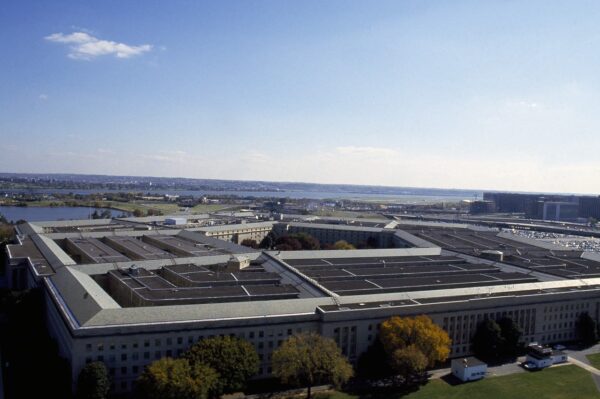
A group of active-duty U.S. soldiers who were seriously injured in the Iran war say the Pentagon has failed its warfighters, accusing the military of denying them care or burying them in red tape just to receive routine results, according to an exclusive Associated Press report released Tuesday.
The AP spoke on the record with nine troops, each of whom was wounded in a deadly Iranian drone strike in Port Shuaiba, Kuwait, on March 1, the day after the conflict began.
Among them was Army Lt. Col. Arturo Lincón, who was nearly killed by shrapnel in the attack.
According to the AP, Lincón’s injuries included a damaged left vertebral artery, which supplies blood to the brain and left him at risk for a stroke. Despite that, the Army did not consider his condition serious enough for him to be admitted to Landstuhl Regional Medical Center in Germany, a major U.S. military facility. Lincón said a nurse there even marveled that he was still alive.
“I was just kind of on my own, at least it felt like that,” Lincón, who previously served in Iraq and Afghanistan, told the AP.
Another service member, Maj. Stephen Ramsbottom, said he waited more than four months to get his MRI results after having shrapnel removed from his head.
“I’ve had to build my own case for everything,” Ramsbottom told the AP. “It’s very frustrating.”
Chief Warrant Officer 4 Rodney Bearman, who also suffered severe shrapnel wounds, described a chaotic aftermath in which a medical evacuation was not possible because of Iranian drones and missiles in the area. As a result, Bearman and others were forced to stay in the homes of U.S. government employees.
It took 10 days before Bearman was able to board a cargo plane to Landstuhl. Once he arrived, he discovered what the report described as another critical military blunder.
According to the AP, Bearman was told he was not listed as wounded in combat and therefore would not be hospitalized at Landstuhl. Instead, he was sent to the barracks and instructed to seek outpatient care.
“Never did I think that if I was wounded that these things would happen,” Bearman told the AP. “Some sacred trust that I thought would never be broken was broken.”
The accounts paint a troubling picture of how some of the service members injured in the opening days of the conflict have been treated in the months since. The soldiers described struggling with delays, paperwork and decisions about the level of care they qualified for, even after suffering serious wounds in a deadly attack.
For Lincón, a veteran of deployments to Iraq and Afghanistan, the experience left him feeling largely alone despite a life-threatening injury. For Ramsbottom, it meant months of waiting and having to advocate for himself at every step. For Bearman, it meant being told he was not on the list of combat wounded after spending days unable to evacuate.
The Army, the Pentagon and the Army’s Human Resources Command did not respond to the AP’s requests for comment.
[READ MORE: Sen. Thom Tillis Says It Is “Almost Statistically Impossible” for GOP to Hold the House]